
A Zeus Cave Lasithi Plateau tour takes you up into the Dikti Mountains of eastern Crete in a 4×4 vehicle, with the cave where the myth places the birth of Zeus as its main stop. Find more day plans in our list of tours in Greece.
Below you will find what the day includes, how long it runs and where pickup starts, the vehicles, the stop-by-stop route, the Potamies off-road stretch, the Embasa gorge, the windmills of Seli Ambelou, the Lasithi Plateau, the Cave of Zeus and its myth, the walk inside the cave, the mountain farm, the Cretan lunch, the drive back and the questions travellers ask.
What does the Zeus Cave Lasithi Plateau tour include?
The Zeus Cave Lasithi Plateau tour includes six items. They are hotel transfers, a 4×4 ride, a driver, a Cretan lunch, wine and water, and the cave ticket. The operator’s listing names one exclusion: personal expenses.
Safari Experts Crete is the activity provider for the Zeus Cave Lasithi Plateau tour. The safari runs as a small group. The listing also marks a private group as available.
Hotel pickup and drop-off cover both ends of the day. The ride between stops is in a 4×4, and the listing calls the driver experienced and knowledgeable. The seven pickup places are named in the next section.
The lunch is a traditional Cretan meal, and local wine and water come with it. Entry to the Cave of Zeus is part of the tour as well, with the ticket included.
Personal expenses, the one exclusion, stay outside the package. The Zeus Cave Lasithi Plateau tour also carries a free cancellation rule. Cancel at least 24 hours before the start and the full amount comes back.
How long is the Zeus Cave Lasithi Plateau tour, and where does the pickup start?
The Zeus Cave Lasithi Plateau tour lasts eight hours. Pickup starts at one of seven places: Heraklion, Agios Nikolaos, Analipsi, Agia Pelagia, Malia, Paralia Fodele or Schisma Eloundas. The same seven places serve for drop-off.
The listing gives the length as eight hours and asks you to check availability for starting times. The operator confirms your exact pickup time after the booking. Keep your plans for that day open until you have the time.
Choose the place closest to your hotel from the seven names. Heraklion is the largest city on Crete. Malia lies about 34 kilometres east of Heraklion.
A travel site rates the rental-car drive to the Lasithi Plateau at about one hour from Heraklion, 60 km. It gives the same hour from Agios Nikolaos, 40 km. Those figures describe a rental car, not this safari.
The listing marks pickup as included and points to the availability check for details. When a hotel sits on a street the vehicles cannot reach, the operator arranges a nearby meeting point. A hard-to-reach street therefore does not rule out the Zeus Cave Lasithi Plateau tour.
Another Crete safari seller also lists its Lasithi jeep tour at eight hours. It asks guests to wait in the hotel lobby 15 minutes before pickup. It adds that drivers wait no longer than five minutes. The listing for this safari states no waiting rule, so ask the operator once your time is confirmed.
On language, the listing says the driver speaks Dutch, English, French, German, Greek and Russian. That is the full language list the listing gives for the Zeus Cave Lasithi Plateau tour.
Check three things before you book. They are the date, the starting time and the pickup place nearest your hotel.
Which vehicles carry you on this 4×4 safari?
The Zeus Cave Lasithi Plateau tour runs in a 4×4 Land Rover Defender or a Mercedes Vito 4×4. The listing calls the transport fully air-conditioned. Without a request from you, the operator assigns one of the two vehicles automatically.
A four-wheel drive, also called a 4×4, is a drivetrain that can power all of its wheels at once. The Land Rover Defender is a series of British off-road cars and pickup trucks with four-wheel drive. The Mercedes Vito is a mid-sized light commercial vehicle made by Mercedes-Benz.
Prefer one vehicle? The listing tells you to contact the operator after booking, and it adds that the choice is subject to availability. The listing describes the day as an exciting off-road 4×4 safari. The Zeus Cave Lasithi Plateau tour follows scenic mountain trails through the Dikti Mountains.
The listing bans three things inside the vehicle: smoking, drinks and food. Plan your meals and drinks for the breaks. The next section lists the stops and breaks of the Zeus Cave Lasithi Plateau tour.
What is the route of the day, stop by stop?
The Zeus Cave Lasithi Plateau tour follows eleven stops in order, from Potamies to a viewpoint over Malia. Nine of them carry a time in minutes, and the visit to Diktaion Andron is the longest at 80 minutes.
- Potamies: a visit and an off-road adventure, 45 minutes.
- Aposelemis Dam: a photo stop and sightseeing, 15 minutes.
- Avdou: you pass by, with no stop time listed.
- Gorge of Embasa-Virgin Mary: an off-road adventure with scenic views on the way, 40 minutes, then a photo stop of 10 minutes that the listing marks as optional.
- Windmills of Seli Ambelou: a photo stop, sightseeing and an off-road adventure, 15 minutes.
- Diktaion Andron, the Cave of Zeus: a visit and sightseeing, 80 minutes, plus an optional break for coffee and a walk.
- Lasithi Plateau: you pass by on an off-road adventure, 30 minutes.
- Krasi: a break and lunch, 70 minutes.
- Platanus Tree: sightseeing and a walk, 20 minutes.
- Mochos: you pass by, with no stop time listed.
- Viewpoint over Malia: a photo stop and a scenic drive, 10 minutes.
Only two stops run longer than an hour: Diktaion Andron and lunch in Krasi. Together they take 150 minutes. Every other timed stop lasts 45 minutes or less. This makes the Zeus Cave Lasithi Plateau tour a day of short stops.
The Zeus Cave Lasithi Plateau tour spreads its off-road driving across the day. The listing tags Potamies, the Embasa gorge, the Seli Ambelou windmills and the Lasithi Plateau as off-road adventure stops. Four stops are photo stops: Aposelemis Dam, the Embasa gorge, the Seli Ambelou windmills and the Malia viewpoint. Avdou and Mochos are only passed by.
The listing marks this route as for reference only and says itineraries are subject to change. Read the minutes of the Zeus Cave Lasithi Plateau tour as the plan on paper.
What do the Potamies off-road stretch and the Aposelemis Dam stop offer?
The Zeus Cave Lasithi Plateau tour starts with Potamies, a 45-minute stop for a visit and off-road driving. Next comes a 15-minute photo stop at the Aposelemis Dam, the largest water management project on Crete.
The listing marks the Potamies stop for a visit and for rough-track driving. Safari Experts calls Potamies a green village on its own Zeus Trails page. It also calls Potamies one of the representative villages of Crete. That page names the Aposelemis dam as the next stop on its route.
The Aposelemis Dam stands on the Aposelemis River, near the villages of Potamies and Avdou. It lies about 32 kilometres southeast of Heraklion. It is an earthen embankment dam with a clay core, 61 metres high and 660 metres long. The listing gives the Zeus Cave Lasithi Plateau tour 15 minutes here for photos and sightseeing.
The Zeus Cave Lasithi Plateau tour visits a dam that holds back about 30 million cubic metres of water. The lake covers 1.6 square kilometres. It is the main freshwater supply for Heraklion and Agios Nikolaos, serving about 300,000 people on the north coast. A 3.5 kilometre bored tunnel adds water from the Lasithi Plateau.
The wall has a spillway 231 metres long. A treatment plant cleans the lake water and feeds a main line more than 70 kilometres long. The dam also gives flood control.
The reservoir also swallowed a hamlet. Sfendyli stood below the filling level, so its residents had to leave. In later dry years it sank and came back into view more than once, and it became a local attraction. The photo stop of the Zeus Cave Lasithi Plateau tour is at the dam of this reservoir.
Safari Experts adds that old houses fade on the surface of the water. Its page also calls the site a natural wetland with birds.
What is the Embasa gorge stop?
The Embasa gorge stop of the Zeus Cave Lasithi Plateau tour is listed as Gorge of Embasa-Virgin Mary. The listing gives the stop 40 minutes on rough tracks with scenic views. An optional 10-minute photo stop follows.
Avdou comes just before the gorge in the listing. It is marked as a pass-by, so no time is set for it. The dam stands near that village, and the listing runs from the dam, to Avdou, to the gorge.
Safari Experts says its Zeus Trails route goes uphill on dirt roads to the gorge of Embassa. Its page also offers the chance to collect local herbs there. The listing for this tour names no herb stop. That detail belongs to the operator’s Zeus Trails page, not to the Zeus Cave Lasithi Plateau tour.
The listing tags the 10-minute photo stop at the gorge as optional. The 40 minutes before it are the off-road part of the stop. The listing adds scenic views on the way.
What are the windmills of Seli Ambelou?
On the Zeus Cave Lasithi Plateau tour, the windmills of Seli Ambelou get a 15-minute stop for photos and sightseeing. The mills stand at the northern entrance of the plateau, and 24 of the original 26 are left.
Seven of the mills stand south of the street that enters the plateau. The rest stand on its northern side. A Crete tourism website says all of them are of the same type. The stop on the Zeus Cave Lasithi Plateau tour covers what that site calls the trademark of the area.
These were grain mills. The same website says the people of Lasithi and other inhabitants of the area used them to grind cereals. It adds that this type grinds in a fixed position, facing a stable wind direction. The same type is also found on Karpathos.
The photo stop on the Zeus Cave Lasithi Plateau tour is at a set with a long record. The website says its existence is mentioned since the Venetian era. It also says the mills of Ambelos were moved here late in the nineteenth century. They came from a place called Zaronas.
A travel site says the road passes the Ambelos Pass, at 894 metres, just before the plateau. It adds that the old windmills give the first glimpse of the Lasithi plain. The listing for the Zeus Cave Lasithi Plateau tour adds off-road driving and scenic views on the way.
What is the Lasithi Plateau?
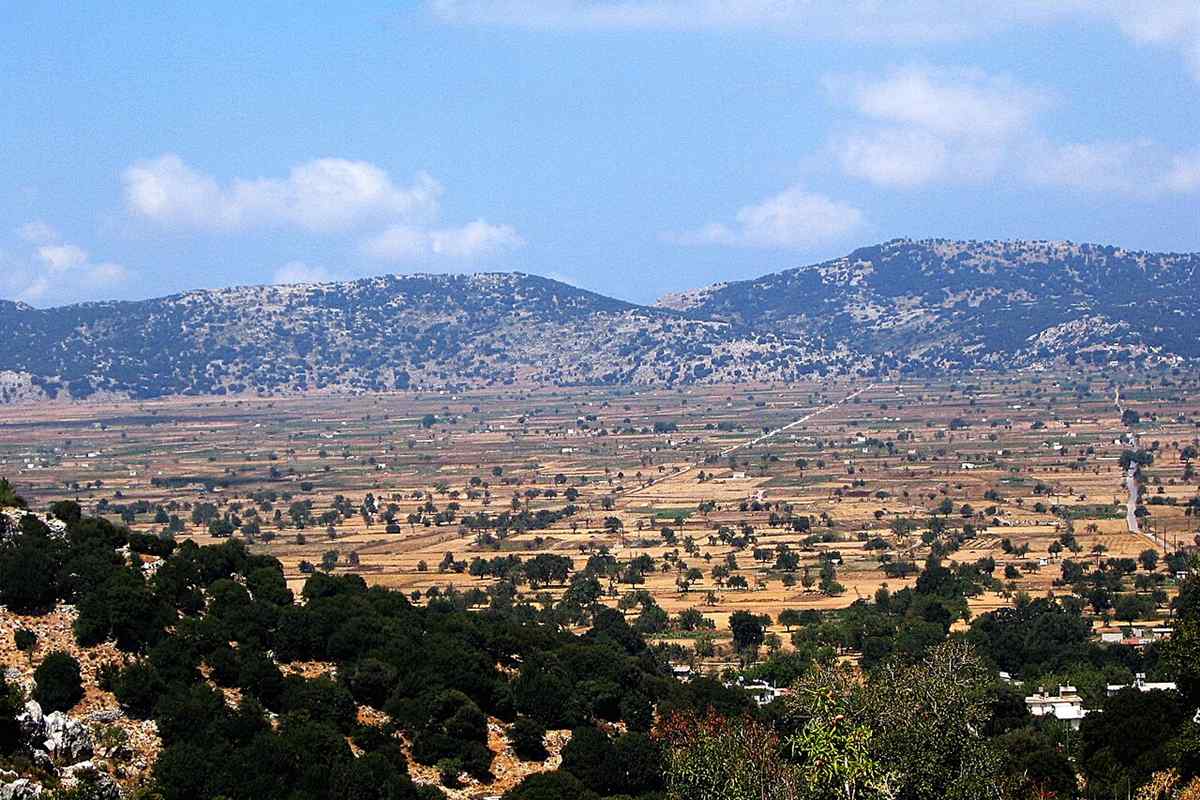
The Lasithi Plateau is a fertile plain in eastern Crete, at an average altitude of 840 metres. The listing gives it a pass-by stop on the Zeus Cave Lasithi Plateau tour and 30 minutes of off-road adventure.
Wikipedia gives the plateau’s size as 11 kilometres from east to west and 6 kilometres from north to south. Its area is about 130 square kilometres. It lies about 70 kilometres east of Heraklion, at the foot of Mount Dikti. The Dikti range reaches 2,148 metres.
The municipality has its seat in Tzermiado, and Agios Georgios is the second biggest village. Wikipedia says agriculture and animal farming give the permanent residents their main income. A hotel’s blog calls the plateau the largest of the plateaus of Crete. The Zeus Cave Lasithi Plateau tour is described as a visit to its traditional villages.
The Zeus Cave Lasithi Plateau tour reaches a plain with fertile soil. Wikipedia says melting snow brings alluvial run-off from the mountains. The Venetians designed a large drainage system with ditches that carry water to the Honos sinkhole. Snow on the plain and the surrounding mountains can last until mid-spring.
Wikipedia calls the plateau’s white-sailed windmills wind-pumps, made to a local design to irrigate the land. There were around 10,000 in the past. The majority are now abandoned in favour of modern diesel and electric pumps. They did a different job from the grain mills of Seli Ambelou, which the Zeus Cave Lasithi Plateau tour visits.


What is the Cave of Zeus, the main stop of the Zeus Cave Lasithi Plateau tour?
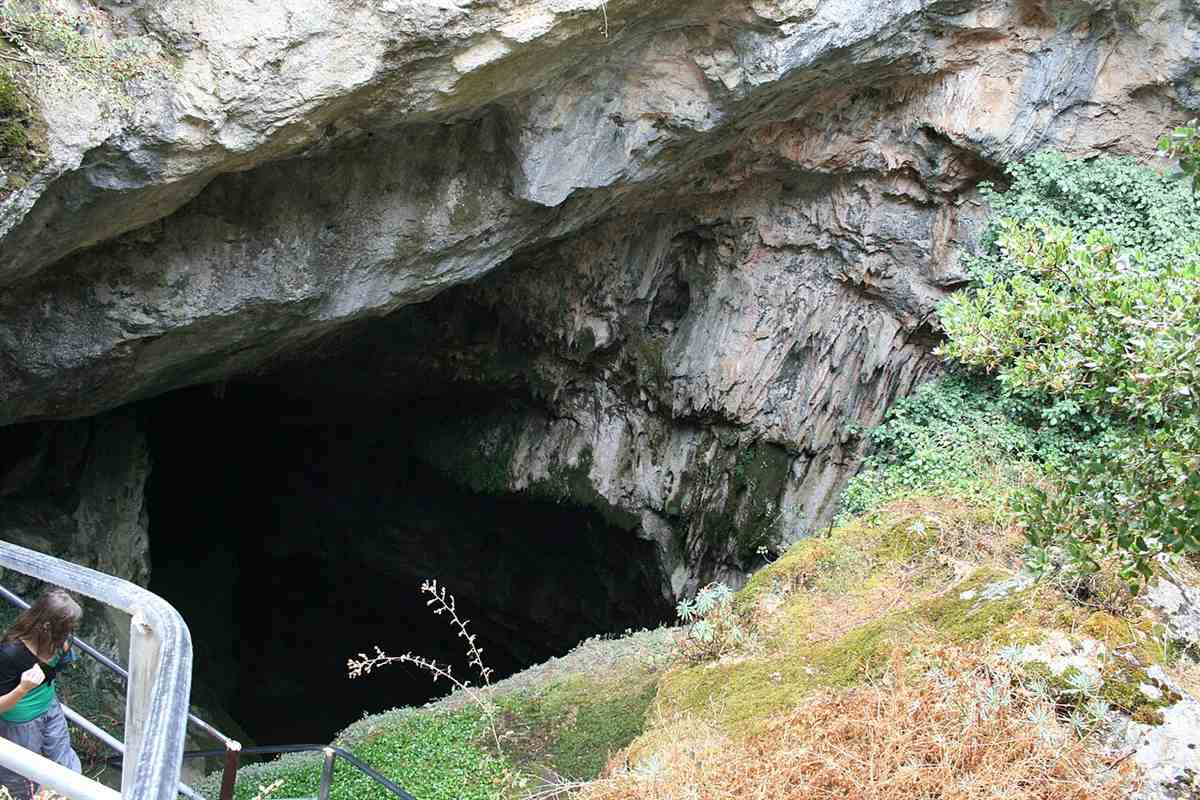
The Cave of Zeus, also called the Dikteon Cave, lies above the village of Psychro. It sits at 1,025 metres in the Lasithi Plateau. The operator’s listing makes it the first highlight of the Zeus Cave Lasithi Plateau tour. The listing sets 80 minutes for the visit.
The official Lasithi tourism page says the cave spans 2,200 square metres and is adequately lit. The large hall holds columns, stalagmites, stalactites and curtains of rock. In the second section, a large folded stalactite is called the Mantle of Zeus, and visitors have damaged it.
The Zeus Cave Lasithi Plateau tour visits an ancient Minoan sacred cave, as Wikipedia calls it. People seem to have lived and buried their dead there from 2,800 BC, the official page says. Worship is believed to have begun around 2,000 BC. Around 700 BC the religious role passed to the Idaean Cave on Psiloritis.
Near the entrance, on the right, an antechamber holds a rectangular altar. Worshippers laid oil, honey, wine, grains and sacrificed animals on it and set them on fire. Excavators found double bronze axes, knives, bronze figurines and a stone offering table with a Linear A inscription.
Shepherds and hunters found objects in the cave toward the close of the nineteenth century. The Zeus Cave Lasithi Plateau tour visits the place of those finds. They are now housed in the Heraklion Archaeological Museum and the Oxford Museum. Wild pigeons nest in the antechamber and bats in the lower chambers, the page adds.
What is the myth of the birth of Zeus in the Dikteon Cave?
Greek myth says Rhea hid baby Zeus in a Cretan cave, away from his father Cronus. The official Lasithi page ties the Dikteon Cave on the Zeus Cave Lasithi Plateau tour to that story.
According to a prophecy, Cronus was to be killed by his son, so he ate his children at birth. Rhea gave birth to Zeus in secret in the Dictaean Cave. She handed Cronus a rock wrapped in baby clothes, and he swallowed it instead.
The official page says the Curetes of Dicte raised Zeus, helped by the goat Amalthea and the nymph Melisse. Wikipedia adds that the Curetes guard the cave and beat their spears on their shields. In the myth, they guard the cave the Zeus Cave Lasithi Plateau tour visits.
The ancient writers do not agree on the spot. Wikipedia says Apollodorus places the birth in a cave in Dicte, while Diodorus Siculus names Mount Ida. The cave of the Zeus Cave Lasithi Plateau tour is the Psychro Cave. Wikipedia says scholars tied it to Dikte at the start of the 20th century. Mieke Prent calls that link probably incorrect.
The official page sets a second tale in the Dikteon Cave of the Zeus Cave Lasithi Plateau tour. Bees filled the cave with honey, and mortals were forbidden to enter. Four friends in bronze armour went in and found the baby clothes of Zeus. Angry Zeus struck them with a thunderbolt, and the Fates turned them into birds.
What is the walk like inside and around the Cave of Zeus?
The Zeus Cave Lasithi Plateau tour includes walking and steps at the cave, which sits above the village of Psychro. The official Lasithi page says the hike up from the village takes approximately 15 minutes. The operator’s listing recommends comfortable shoes.
The official page names two paths from Psychro up to the cave. The one on the left is the easier. The older second path has been worn down by thousands of visitors and is slippery. Donkeys carry visitors who do not want to walk. A travel site asks adults not to ride them, for animal welfare reasons.
The official page says the route up gives a panoramic view of the Lasithi plain. A kiosk next to the entrance sells tickets. On the Zeus Cave Lasithi Plateau tour, the operator’s listing states that the entrance ticket to the cave is included.
The listing for the Zeus Cave Lasithi Plateau tour names steps at the cave. A travel site describes steps that lead down past a small lake and back up at the end. Wikipedia mentions traces of a rock-cut stair in the lower grotto, which falls steeply to a pool.
Inside, the official page calls the cave adequately lit, with well-maintained paths of 250 metres in total. At the cave stop, the Zeus Cave Lasithi Plateau tour lists an optional break with coffee and a walk. The travel site adds that photography without flash is permitted. It gives 15 degrees as the normal cave temperature.
What happens on the Zeus Cave Lasithi Plateau tour when the cave is closed?
The listing says the Cave of Zeus is officially closed on Tuesdays. On that day, the Zeus Cave Lasithi Plateau tour changes its itinerary. Guests can enjoy nearby cafes or alternative activities that the driver suggests.
The operator’s listing states this in two short notes. The first gives the Tuesday closure and says the itinerary is adjusted. The second names nearby cafes and alternative activities. The listing does not name those activities. It says only that the driver suggests them.
The listing names Tuesday as the closed day. A traveller who wants to walk into the cave on the Zeus Cave Lasithi Plateau tour can pick another weekday. The cave is the Diktaion Andron stop of the itinerary, so the closure touches the walk and steps described above.
The cave’s schedule is not set by the operator. The listing says entrance fees and opening schedules are determined by the site authorities and can change. The Tuesday rule is therefore not fixed for all time, so read the listing’s notes again before you travel.
On the Zeus Cave Lasithi Plateau tour, the Tuesday note sits in the listing’s know-before-you-go section. It comes right after the note on walking and steps at the Cave of Zeus. The notes on nearby cafes and on opening schedules follow it.
What is the mountain farm stop with goat milking and shepherd’s cheese?
In the operator’s listing, the Zeus Cave Lasithi Plateau tour stops at a traditional mountain farm. You take part in hands-on activities such as milking goats. Then you taste freshly made shepherd’s cheese and other local products prepared by the farmers.
Farm life is one of three highlights that the listing names for the Zeus Cave Lasithi Plateau tour. The short description says you try goat milking and local cheese at “our mountain farm”. The longer text asks you to take part, so you join the milking instead of only watching.
The stop list of the Zeus Cave Lasithi Plateau tour gives the farm no name, no village and no minutes. This page therefore names no farm and gives no time for it. A different seller lists a shepherd’s farm on its own route, where you learn how Cretan cheese is made. That offer is separate from this one.
Wikipedia’s article on Cretan cuisine says dairy products were eaten daily, in low to moderate quantities. The same article names graviera cheese among the island’s appetizers. Wikipedia’s page on graviera says Graviera of Crete is made from sheep’s milk and ripened for at least five months.
Graviera of Crete is one of three graviera with a protected designation of origin. Wikipedia describes its taste as slightly sweet, with a burnt caramel flavour. The listing for the Zeus Cave Lasithi Plateau tour names the farm’s cheese only as shepherd’s cheese. Read this as background on Cretan cheese, not as a menu.
What is the traditional Cretan lunch at the end of the tour?
The Zeus Cave Lasithi Plateau tour serves a traditional Cretan lunch with local wine and water. The itinerary lists Krasi as a break and lunch stop of 70 minutes. The description ends the day in a village square with the meal.
Three more stops follow Krasi in the stop list. The listing calls its itinerary for reference only and subject to change. It does not say whether the village square is in Krasi. It gives no dish names, so this page has no menu to quote for the Zeus Cave Lasithi Plateau tour.
A travel site calls Krasi a mountain village at an elevation of 600 metres. It places the village on the road from Malia to the Lasithi Plateau, past the hamlet of Ano Kera. That is background on the area around the Zeus Cave Lasithi Plateau tour, not a description of its lunch.
Wikipedia’s article on Cretan cuisine describes the traditional diet. Olive oil was the main fat, used in salads and in cooking. People ate seasonal products from the wider local area. Red wine, taken in moderation, accompanied meals.
The article names dishes such as dakos, a stamnagathi salad and graviera cheese. A travel site adds that taverns on the Lasithi Plateau serve traditional Greek cuisine, rustic in style but homemade. Both are background for the Zeus Cave Lasithi Plateau tour, whose listing names the lunch only as traditional Cretan.
What are the plane tree, Mochos and the Malia viewpoint on the way back?
After the lunch break, the Zeus Cave Lasithi Plateau tour lists three more stops. The stops are a 20-minute walk at the Platanus Tree and a pass by the village of Mochos. The last is a 10-minute photo stop at a viewpoint over Malia.
The Zeus Cave Lasithi Plateau tour itinerary names this stop the Platanus Tree and lists it right after Krasi. It does not say where the tree stands. Platanus points to the plane tree: the oriental plane is named Platanus orientalis. Wikipedia says it grows naturally in river settings, beside alder, willow and poplar.
Wikipedia says a plane tree grows into a massive tree, with examples hundreds of years old. Its broad, thick leaves give shade and coolness in the hot season. Greek villages feature plane trees in the main square, frequently beside a spring that once was the main water source.
On the Zeus Cave Lasithi Plateau tour, Mochos is a pass by, and the listing gives it no minutes. Wikipedia places the village in the mountainous interior, about 45 kilometres southeast of Heraklion, at 400 metres of height. It says the central square keeps architecture from the 16th century.
These facts describe the village, not a tour stop. Mochos has a Folklore Museum that shows traditional Cretan life, with a rebuilt Cretan house and a collection of tools. On the night of 14 to 15 August, the village celebrates the Virgin Mary with Cretan food, music and dance.
The last stop on the list of the Zeus Cave Lasithi Plateau tour is the viewpoint over Malia. The listing tags it as a photo stop, a scenic drive and scenic views on the way. It gives the stop 10 minutes.
Wikipedia calls Malia a coastal town in the northeast corner of the Heraklion region, about 34 kilometres east of Heraklion. It has a 6-kilometre sandy coastline. The ruins of a Minoan palace lie three kilometres east of the town centre.
A travel site says the road from Malia to the plateau climbs to nearly 900 metres. It adds that frequent overlooks show the Rozas Gorge and the north coast.
What do you bring, who needs to skip this tour, and what stays out of the vehicle?
Bring comfortable shoes, sunglasses, a hat, sunscreen and comfortable clothes. The Zeus Cave Lasithi Plateau tour is not suitable for people with heart problems or recent surgeries. Smoking, drinks and food are not allowed in the vehicle.
These five items are the whole bring list for the Zeus Cave Lasithi Plateau tour. A sweater is not on it. A travel site says the Lasithi Plateau runs 5 to 10 degrees cooler than the coast and recommends a sweater.
The listing names two groups that the Zeus Cave Lasithi Plateau tour does not suit. They are people with heart problems and people with recent surgeries. It gives no reason for either group. Anyone in one of these groups needs to skip the tour and pick another day out.
Three things are banned in the vehicle on the Zeus Cave Lasithi Plateau tour: smoking, drinks and food.
What else do travellers ask about the Zeus Cave Lasithi Plateau tour?
Which other legends are tied to the cave on the Zeus Cave Lasithi Plateau tour?
The official Lasithi page says the prophet Epimenides fell asleep in the Dikteon Cave for 57 years. He woke with divine wisdom. The page adds that King Minos met his father Zeus there every nine years and received new laws. Another version of the Europa myth says Zeus brought her to this cave, not to Gortyna.
Did worshippers honour only Zeus in the cave?
The official Lasithi page says weapons were found, but the majority of the finds are female offerings. They include hair curlers, needles, spindle whorls, hairpins and necklaces. The page reads them as worship of a goddess of Minoan type. It also reports an archaeological view that links Ariadne with the deity of Psychro.
Which cave came before the one on the Zeus Cave Lasithi Plateau tour?
The official Lasithi page names the Trapetza cave, near the village of Marmaketo. It says Trapetza held the leading role in worship before the Dikteon Cave took over. A hotel’s blog counts more than 3,000 caves on Crete. The Zeus Cave Lasithi Plateau tour therefore visits one cave among more than 3,000.
Is there anything else to see in Psychro next to the cave?
A travel site places the Greek Mythology Thematic Park directly across from the Psychro parking lot. It spans 3,000 square metres, indoors and outdoors, with life-size statues, temple reconstructions and interactive exhibits. The same site notes a fountain worth seeing in the town centre. The Zeus Cave Lasithi Plateau tour listing names no park among its stops.
What is the Lasithi Plateau like in each season?
A travel site says the valley is covered in blossoms from March to late spring. It reports the apple harvest in autumn, with early fog over the fields in September and October. In winter, locals sit in taverns by the fireplace while the first snow falls. The site also warns of fierce wind at the Seli Ambelou windmills.
When is the cave busiest, and which holidays close it?
A travel site says summer brings large crowds and the cave is busiest around noon. The Zeus Cave Lasithi Plateau tour listing gives no clock time for the cave stop. Ask the operator when your group arrives. The same site lists holiday closures, among them 1 January, 25 March, Easter Sunday, 25 December and 26 December.