A Naxos cooking class takes you into a family kitchen to cook island recipes by hand and share the meal at the table. Open the full list of tours in Greece for other things to do on the islands.
This page covers what the lesson includes, how it runs step by step, the dishes and ingredients, the venues from family taverns to farms, who joins, what to bring and the questions travellers ask.
What does a Naxos cooking class include?
A Naxos cooking class includes hands-on cooking with an instructor and ingredients from the host’s own garden. You then sit down to a shared meal of the dishes you made, with starters and local wine.
Hands-on work is the core of a Naxos cooking class. At one family tavern, guests chop, knead and simmer alongside local hosts. The host calls the classes beginner-friendly and says no experience is needed, only curiosity and an appetite.
The tours add farm life around the stove. On one village tour, guests take a short walk up to the local river with the instructor. They also see how a local producer makes cheese. At the end of the Naxos cooking class, the lesson turns into a feast, with local wine and traditional music.
The classes teach as well as feed. On the village tour, the instructor shares the secrets of herbs and aromatic plants. On one farm tour, guests learn how the olive trees are kept healthy and how the olive oil is made. They also meet the Naxian potato in the field.
You also take something home. One host gives step-by-step recipes and tips, so you can recreate the meal anywhere. Transport differs by host. A Naxos cooking class at a watermill includes round-trip transfers from a central meeting place. The village tavern tour does not include hotel transfer.
How does a Naxos cooking class run, step by step?
A Naxos cooking class on a farm follows four steps: welcome, farm walk, cooking, and shared meal. Tours last from 2 hours to 4 hours, and one farm runs up to 5 hours.
Step one is the welcome. At one farm kitchen, a Naxos cooking class opens with a welcome drink. The choice is homemade lemonade, herbal tea or a homemade liqueur, served with local Naxian cheese.
Step two is the walk and the picking. On one farm tour, guests meet chickens, rabbits, pigs and peacocks and collect the day’s freshly laid eggs. They then visit the olive groves and the potato fields. They try seasonal fruit from the trees and gather vegetables in the vineyard and vegetable garden.
Step three is the cooking, and the method of a Naxos cooking class changes by host. One farm cooks over a wood fire. There the host’s father, who learned wood-fired cooking from his own mother, shows the traditional methods. Another farm uses a stone wood-fired oven, and each guest kneads an individual loaf.
A watermill class starts with dough made from scratch before the baking. That class follows a zero-waste philosophy and uses seasonal ingredients, and the whole class lasts 2 hours.
Step four is the meal. At the tavern, the group shares the meal with a glass of island wine. At the watermill, guests eat on the roof terrace with homemade wine and dessert. At another farm, everyone shares a long Greek table with views of the valley and the sea.
On the Melanes farm tour, guests sample Naxos cheeses and end with a spoonful of homemade fruit preserves. They can also join traditional Naxian dances and smash plates.
Start times depend on the host. One tavern runs classes at 11:00 in the morning and 3:30 in the afternoon. They run as daily group classes or private sessions. A farm near Melanes starts at 10:00 in the morning and 3:30 in the afternoon. Plan your day around those times when you book a Naxos cooking class.
Group size is capped too. The tavern tour takes up to 15 people, and the watermill class takes up to 12.
Which dishes do you cook in a Naxos cooking class?
In a Naxos cooking class you make dishes such as bread, stuffed vegetables, tzatziki, savory pies and a Naxian omelet. Then you eat them together at one table. The menu differs from host to host.
A Naxos cooking class at Zymoma in Galini follows a traditional menu. You knead and bake a rustic loaf with local flour. You make gemista, which are fresh summer tomatoes and peppers filled with herb-infused rice. You also wrap tender grape leaves by hand. The rest of the Zymoma menu looks like this:
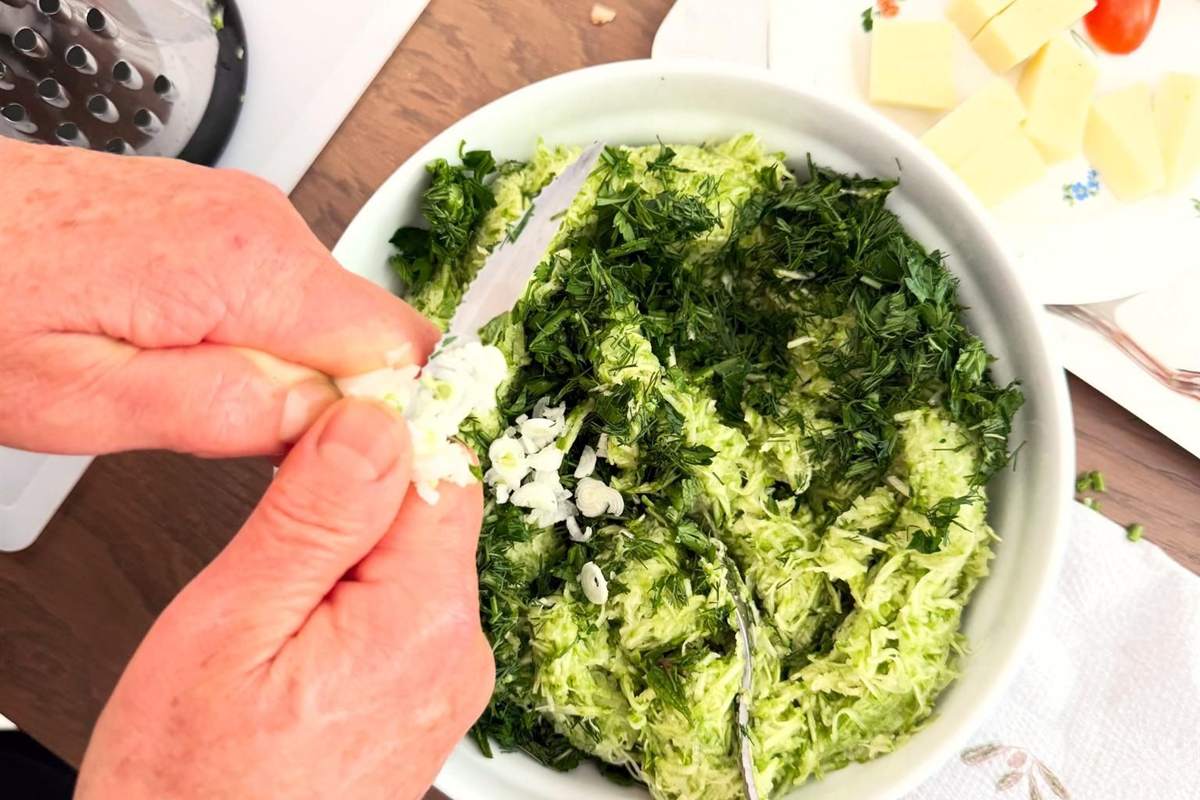
- Naxian potato fries and fresh tzatziki, a creamy dip of cucumber and garlic
- A fresh Greek salad with tomatoes and olives, or dakos, which are barley rusks topped with chopped tomatoes and local cheese
- Pasteli, a sesame honey bar made with local honey, Aegina pistachios and orange zest
- Depending on the day, keftedakia (Greek meatballs), crispy fried zucchini sticks or a rustic Naxian omelet with potatoes
At the Perivoli farm near Melanes, a Naxos cooking class runs over a wood fire. You cook a Naxian omelet, an appetizer and a main dish such as briam or gemista. The appetizer is something like zucchini balls or fried graviera cheese wrapped in filo pastry with honey and sesame seeds. Tzatziki is the dip.
Other hosts lean on baking and slow cooking. In the 2-hour Naxos cooking class at the 18th-century watermill in Potamia, you make dough from scratch. You bake a handmade seasonal pie, along with a slow-roasted stew. At Basiliko, you master meze, savory pies and slow-cooked favorites. At Elaiolithos, you prepare two traditional Naxian recipes.
The watermill host says the menu varies with seasonal availability. Guests of that Naxos cooking class who want a particular dish can add the request in the booking form.


Which Naxian ingredients go into the dishes?
A Naxos cooking class draws on a fertile island with a good water supply. The pantry holds potatoes, cheese, olive oil, honey, herbs and garden vegetables. At Basiliko and Perivoli, you pick the vegetables yourself.
Naxos is well known within Greece for its Arseniko Naxou cheese, potatoes, Kitron citron spirit and honey. Mount Zeus, the highest peak in the Cyclades, traps clouds and brings more rain. That has made farming an important part of the island’s economy.
The Naxian potato appears in more than one Naxos cooking class. Perivoli walks you through its potato fields and introduces the renowned Naxian potato. Later you cook Naxian potatoes over the wood fire. At Zymoma, you fry the Naxian potatoes into fries.
Graviera is a hard cheese, and the Naxos version is made from 80 to 100 percent cow’s milk. Graviera Naxou holds protected designation of origin status. A Naxos cooking class at Perivoli lets you sample a variety of Naxos cheeses. Zymoma welcomes guests with local Naxian cheese. Basiliko shows you cheese making with a local producer.
Olive oil comes from the island’s groves. At Perivoli, you visit the olive groves and learn how the family grows healthy trees for top-quality olive oil. Basiliko names local cheeses and olive oil among the produce in its Naxos cooking class.
Flour and honey are local too. At Zymoma, you bake with Zea flour, an ancient grain known for its nutritional value since antiquity. The pasteli uses local honey, and Naxian honey comes largely from thyme nectar.
Eggs, fruit and herbs are on the list as well. At Perivoli, you can collect the day’s freshly laid eggs and taste homemade fruit preserves. Elaiolithos sources its ingredients from farms within 5 km and sends you home with local herbs. Basiliko teaches the secrets of herbs and aromatic plants.
Where do Naxos cooking classes take place, from family taverns to farms?
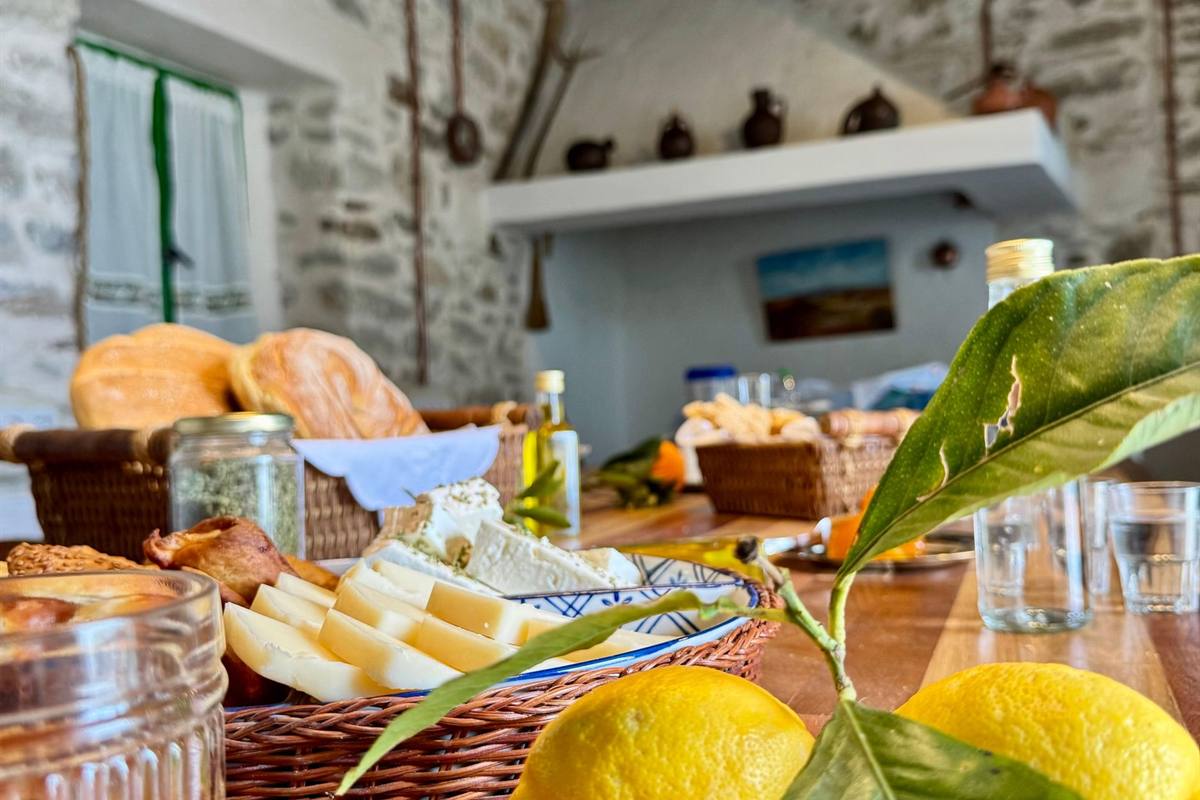
A Naxos cooking class takes place in a tavern, on a farm, in a watermill, or on a mountain terrace. Each host has its own village and setting, and five of them show the range.
Basiliko holds its Naxos cooking class in Lyrado, in the Kato Potamia area. The operator describes Lyrado as a traditional village of Naxos. The family tavern stands 10 km from Naxos Town and 15 km from Agia Anna beach. The class welcomes a maximum of 15 guests, and the cooks pick produce from the tavern’s own garden.
Zymoma runs its Naxos cooking class on a family farm in Galini, just 10 minutes from Naxos Town. Guests bake in a stone wood-fired oven. They eat at a long table with views of the valley and the sea. The meeting point is the main entrance of Galini village, in front of Agios Nikolaos church. Arrive 10 minutes early.
The watermill class is set in an 18th-century mill in the Potamia valley, called the “village of rivers”. Its host page calls it the only restored watermill on the island. It is a small-group Naxos cooking class with up to 12 guests. The meal is served on the mill’s roof terrace.
Perivoli is a family-owned farm near the village of Melanes. The visit starts with the farm animals and ends with cooking over a wood fire. Its Eatwith listing is a public event, so other guests join you, but a private booking is possible.
The farm’s story is local too. The owner’s grandfather shaped the mountainside into terraces and built a water well next to the river. Today the land holds olive trees, fruit orchards, vineyards, and potato plots.
Elaiolithos teaches on a 500-meter mountain terrace overlooking the island. The host says no other class on Naxos is held on such a terrace. This Naxos cooking class is private, starts at 1:00 PM, and runs from April to October. Advance booking is required.
Who enjoys a Naxos cooking class, and what do you bring?
A Naxos cooking class suits couples, families, friends, solo travelers, and complete beginners. Bring comfortable shoes, sunglasses, a sun hat, and sunscreen. Luggage and large bags are not allowed at the Basiliko class.
Basiliko says no experience is needed, and its classes are beginner-friendly and family-friendly. Private sessions are open to couples, families, and groups. Vegetarian and vegan options are available, and Elaiolithos adapts its class for them too.
Elaiolithos names couples, honeymooners, solo travelers, and friends as its guests. Outside visitors can join, not only hotel guests. A smooth ramp joins the parking area to the cooking terrace. Wheelchair users and guests with limited mobility can take part.
Zymoma lists children aged 6 to 12 as guests. It also arranges private events and special celebrations on request. Basiliko and Zymoma both run small groups. One Basiliko guest calls the class a good way to meet other travelers.
Past guests of a Naxos cooking class at Basiliko advise good walking shoes. One says the hosts suggest gym shoes, because there is plenty of walking on the farm.
The three hosts differ on privacy. The Elaiolithos class is private, and the watermill class is not. Perivoli offers both a public event and a private booking. Check this before you pick a Naxos cooking class for your group.
Plan your ride before you book. Basiliko does not include a hotel transfer, so you travel to Lyrado yourself. The watermill class includes round-trip transfers from a central meeting location. Give details of any food allergies when you book.
What else do travellers ask about a Naxos cooking class?
How long does a Naxos cooking class last?
The length depends on the host, from 2 hours to a full half day. The watermill class takes 2 hours, and the Basiliko tavern class takes 4 hours. The Perivoli farm class runs from 10:00 to 14:15 or from 15:30 to 19:45. The farm says a tour can stretch to 5 hours.
Basiliko starts its classes at 11:00 a.m. and 3:30 p.m., so you can pick a morning or an afternoon.
Can you cancel a booking for a Naxos cooking class?
Yes, and the notice period depends on the host. The Basiliko tour and the Zymoma farm both give free cancellation up to 24 hours in advance. The Perivoli farm also refunds in full if you cancel at least 24 hours before the start.
The watermill class needs 48 hours’ notice for a full refund minus a processing fee. Inside 48 hours it is not refundable. Your card is not charged until the host confirms the booking. The Basiliko tour also lets you reserve now and pay later.
How big are the groups, and can children join?
Groups stay small. The Basiliko tour takes a maximum of 15 participants. The watermill class takes a maximum of 12 and is not private. Basiliko also offers private sessions, and the Perivoli listing lets you book a private event.
Children join at these hosts too. Zymoma lists a children’s booking category for ages 6 to 12. Perivoli lists its class for adults and children aged 12 and over. Check the age rules with your host before you book.
Does a Naxos cooking class cater for vegetarian and other diets?
Yes, tell the host when you book. Basiliko lists vegetarian, vegan and gluten-free options. A Naxos cooking class at the watermill accommodates lactose-free, gluten-free, vegetarian and vegan diets if you request them at booking.
Give details of any food allergies at the same time. The Basiliko tour page asks for them at booking. The Zymoma booking form has a line for food allergies and special requests.
Do you take recipes home, and is wine served?
Basiliko gives you step-by-step recipes and tips to take home. It ends the class with a shared feast and a glass of island wine. The other hosts do not state on their pages whether recipes go home, so ask before you book.
Wine is served at every Naxos cooking class named in this post. Zymoma pours local Naxian wine, and Perivoli serves its house wine. The watermill class pairs the meal with its homemade wine.
How do you get to a Naxos cooking class?
Check transport before you book, because pickup differs by host. The Basiliko tour does not include hotel transfer. The tavern sits 10 km from Naxos Town and 15 km from Agia Anna beach. Reviews say clearer transport guidance is needed, so ask the host for directions.
A Naxos cooking class at the watermill includes round-trip transfers from a central meeting location. Zymoma meets guests at the main entrance of Galini village, in front of Agios Nikolaos church. It asks you to arrive 10 minutes early. The farm is 10 minutes from Naxos Town.