
A Chania olive oil tasting leaves the harbour town behind and visits producers in the countryside, from an ancient olive tree to a winery cellar. Visitors who stay longer can pick from other tours in Greece around Crete.
This page covers what the tour includes, the length of the day and the pickups, the Olive Tree of Vouves, the bakery stop, olive oil making at the mill, honey in the grove, the cheese factory, the Pnevmatikakis Winery and answers to common questions about Chania olive oil tasting.
What does the Chania olive oil tasting tour include?
The Chania olive oil tasting tour from TourMaster includes hotel pickup, drop-off, a professional host and an air-conditioned vehicle. It also covers every food and drink sample the listing names. Tips, extra refreshments and personal purchases are not included.
The listing’s title names four products: olive oil, wine, cheese and honey. Its description says you visit an ancient olive tree, a bakery, an olive mill, a cheese factory and a winery. You taste traditional local delicacies along the way.
Each stop on the Chania olive oil tasting adds something to the ticket. The listing names these inclusions:
- Hotel pickup and drop-off from Chania and the coastal areas around it
- A professional local host with expert insight into Cretan history and food
- Travel in a comfortable, air-conditioned vehicle
- A visit to a traditional bakery for fresh Cretan treats
- A visit to a local factory to see oil production
- A professional tasting at a multi-award-winning cheese factory
- A tour of a family-owned winery cellar
- All food and drink samples listed in the tasting package
The listing keeps three things outside the package. Food and drinks beyond the tasting, personal purchases and tips for the host and driver are not included. Tips are optional. The Chania olive oil tasting also gives you the chance to buy local products to take home.
Children are welcome. At the winery they receive a specially crafted platter and drinks. You can cancel up to 24 hours before the start and get your money back in full. The Chania olive oil tasting day is easy to drop if your plans change.
How long is the Chania olive oil tasting day, and how do pickups work?
The Chania olive oil tasting day lasts 7 hours, and the listing shows no fixed start time. Check availability for your date to see the starting times. Hotel pickup is included, and your exact pickup time reaches you through your booking.
The listing names the stops in this order and marks the plan as for reference only. It says itineraries are subject to change. A Chania olive oil tasting day runs like this:
- The ancient Olive Tree of Vouves
- A family-run bakery
- A cheese factory
- An olive grove, with the full honey-making process
- A local olive mill
- A family-owned winery
- A tasting platter of olive oil, fresh tomatoes, olives, cheese, honey and more
Pickup is included from Chania and the coastal areas around it. The listing offers 111 pickup options and 111 drop-off locations. Named points include Nea Chora, Platanias, Agia Marina, Stalos, Maleme, Tavronitis and Kolymvari. The list also holds hotels, resorts, supermarkets and bus stops. The drop-off list names the same points.
Your exact pickup time is posted to your booking. Check it 24 hours before the Chania olive oil tasting for the final details. Be at your pickup point 5 minutes before that time.
Cruise passengers have their own meeting point for the Chania olive oil tasting. It is the Sklavenitis supermarket, 6 minutes on foot from the cruise pier. The listing gives a map pin for it. The return to Souda Port is at approximately 3:30 in the afternoon, and no later than 3:45.
What is the Olive Tree of Vouves, the first stop?
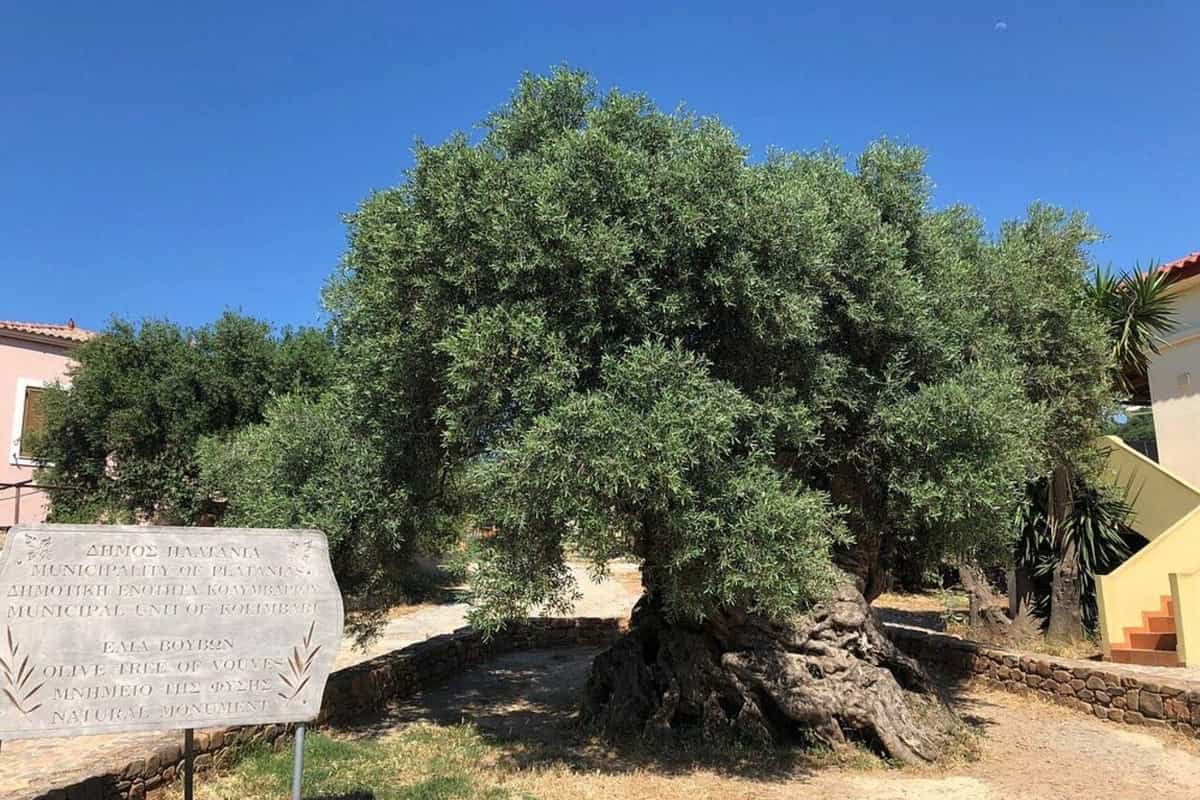
The Olive Tree of Vouves is an ancient tree in the village of Ano Vouves. It is the first stop of the Chania olive oil tasting day. The listing calls it the oldest known olive tree in the world.
The tree stands in Ano Vouves. This village lies in the municipal unit of Kolymvari, in the Chania regional unit of Crete. A reference article says the tree still produces olives today. It was grafted with the Tsounati cultivar. So a Chania olive oil tasting that begins here starts with a living tree, not only a relic.
Nobody can fix the exact age. The same article says tree-ring analysis shows the tree is at least 2,000 years old. Scientists from the University of Crete have estimated 4,000 years. The listing gives a wider range of 3,000 to 5,000 years. On your Chania olive oil tasting, read every figure as an estimate.
The trunk has a perimeter of 12.5 metres and a diameter of 4.6 metres. The listing describes it as gnarled and sculptural. The tree is a protected natural monument. Branches from it were used to weave the victors’ wreaths for the Athens Olympic Games.
A nearby 19th-century house holds the Olive Tree Museum of Vouves. Its displays show the traditional tools and process of olive cultivation. The listing for the Chania olive oil tasting names only the tree as the stop, not the museum.
What do you taste at the family-run bakery?
At the family-run bakery you taste traditional Cretan rusks, fresh bread and savoury pastries. It is the second stop of the Chania olive oil tasting, right after the old tree. The listing promises fresh Cretan treats from a traditional bakery.
The listing says rusks. The Greek name for this kind of hard bread is paximadi. A reference article describes paximathia as a hard bread similar to rusk, made with whole wheat, chickpea or barley flour. It calls the bread a staple food for the inhabitants of Crete. That makes the bakery a local start to a Chania olive oil tasting.
Bakers made paximadi to last. The bread was baked in outdoor ovens about every ten to fifteen days. It was then sliced thickly and put back in the oven to dry, which preserved it. Today it is baked overnight in ovens that have been turned off, so the leftover heat dries it.
Farmers ate paximadi after soaking it in water and olive oil, which softened it. Paximadi is also the base of dakos, a Cretan salad. It is a soaked rusk topped with chopped tomatoes, crumbled feta and olive oil, seasoned with dried oregano. The listing does not name dakos, so the Chania olive oil tasting does not promise it.
The listing gives no menu for the bread and pastries. Sarikopita is a cheese pie twisted to resemble the sariki, a traditional Cretan headwear. Kreatotourta is a meat pie from western Crete, where Chania lies. Stafidota are cookies stuffed with raisins. These are facts about Cretan food, not a menu for the Chania olive oil tasting.
The bakery also sells its products. The listing gives you the option to buy any of them and to choose favourites to take home. After that, the Chania olive oil tasting day continues to the cheese factory.
How is Cretan olive oil made at the olive mill?
The olive mill is the stop on the Chania olive oil tasting tour for the oil itself. You see how Cretan olive oil is produced, from harvesting the olives to pressing and finishing the final product. The listing names these steps but does not name the mill.
Every Chania olive oil tasting starts with the olive. Koroneiki is a Greek variety grown mainly for oil, and it grows on Crete. Its fruits are small but give a high quality oil. Harvest in the Mediterranean starts in autumn, from October onwards. In parts of Greece, steep ground means hand picking, which leaves the fruit unbruised.
At the mill, the first step is washing the olives. This cuts down soil, which can leave a “soil taste” in the oil. Then large millstones or modern mills grind the olives into paste. Millstones need 30 to 40 minutes, while modern grinders take seconds. Ask the host if the mill on your Chania olive oil tasting still uses stones.
Next the paste is stirred for 20 to 30 minutes. This step, called malaxation, joins tiny oil drops into larger ones. The paste is then pressed on stacked fiber disks, and a centrifuge splits the oil from the water. The listing puts pressing between harvest and finishing at the Chania olive oil tasting mill.
Finishing sets the grade. Oil made by mechanical means only is called virgin oil. Extra virgin oil must also have low free acidity, no more than 0.8%, and no sensory defects. Read the labels after your Chania olive oil tasting. In the EU, “cold pressed” needs proof that malaxation and extraction stayed under 27 degrees Celsius.



What do you learn about honey in the olive grove?
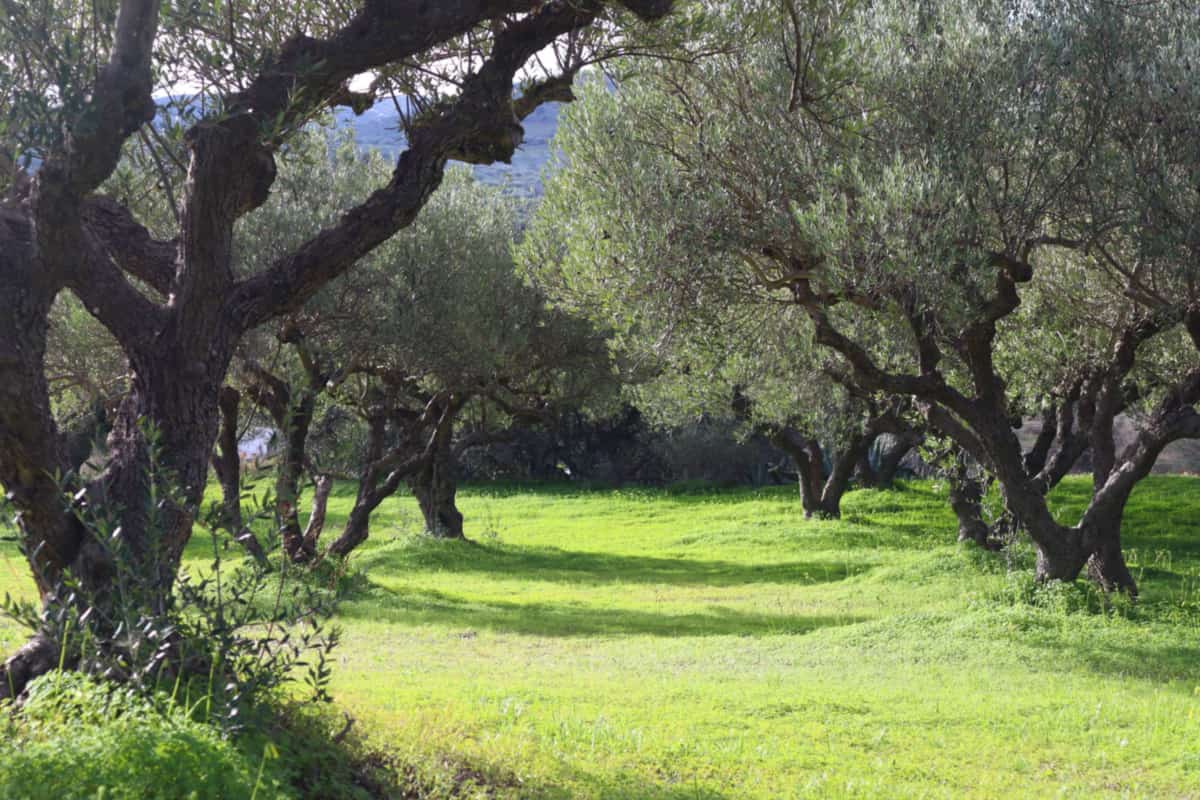
On the Chania olive oil tasting tour you stroll among ancient olive trees. There you learn the full honey-making process, from the bees and hives to extraction and bottling. The listing does not name the grove.
A honey bee starts with nectar, which holds 70 to 80 percent water. Its honey stomach holds about 40 milligrams. Filling it can take visits to more than one thousand flowers. In the hive, workers pass the nectar along and form bubbles in it. Wing beating then draws out water until the honey holds 15.5 to 18 percent.
A beekeeper can calm the bees with a bee smoker. The honey leaves the honeycomb by crushing or in a honey extractor. It can then be filtered to remove beeswax. The honey stop of the Chania olive oil tasting ends with bottling. A hive gives about 29 kilograms a year on average.
The flowers shape the honey. Monofloral honey comes mainly from one kind of flower, and thyme is a European example. Crete has thyme among its native herbs. Honey in Greece comes mainly from fruit and citrus trees, plus thyme honey and pine honey. Ask the host which flowers the bees visit on the Chania olive oil tasting.
Beekeeping in Greece is old. In 594 BCE it was so widespread around Athens that Solon passed a law about it. A new hive had to stand 300 feet, or 90 meters, from hives already set up by another beekeeper.
What happens at the cheese factory, from graviera to mizithra?
The cheese factory on the Chania olive oil tasting tour is a multi-award-winning stop that follows the bakery. Depending on the season, you either watch cheese being made or hear the host explain each step. Then comes the cheese tasting.
The tour listing does not name the cheeses made there. Two cheeses of Crete, graviera and mizithra, show the range from hard to soft. Knowing them helps you follow the host on a Chania olive oil tasting day.
For the cheese stop of the Chania olive oil tasting, graviera is the hard cheese to know. Graviera of Crete uses sheep’s milk and ripens for at least five months. It tastes slightly sweet, with a note of burnt caramel. The EU lists Graviera Kritis as a protected designation of origin product.
Mizithra sits at the soft end. It is a whey cheese from sheep’s milk, goat’s milk or both. Fresh mizithra is snow-white and creamy. With no salt added, it tastes almost sweet and milky. Cheese and honey both feature in the Chania olive oil tasting. Cretans eat fresh mizithra as a dessert with honey.
Salted and aged, mizithra becomes xynomizithra, which is drier and more sour. Mizithropita is a flatbread stuffed with mizithra. Amarino, Seliano, Tirozouli and Tiromalama are other cheeses of the island. Ask the host which you taste on the Chania olive oil tasting.
What is the Pnevmatikakis Winery, and what do you taste there?
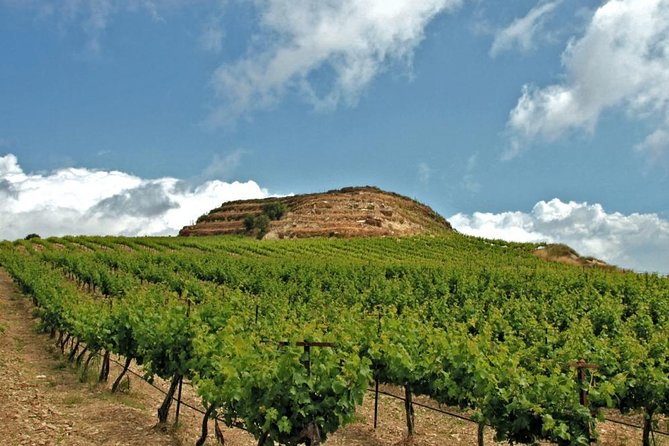
The Pnevmatikakis Winery is a family-owned winery in Kissamos, a town in the Chania regional unit. The Chania olive oil tasting tour lists a cellar tour and 20 local wine samples. The wines come paired with Cretan delicacies.
On the Chania olive oil tasting, you visit a winery that calls itself family-run. It sits by the old national road at Drapanias. Its website says a distillery operates alongside the wine factory. Kissamos, it adds, has a long tradition of wine making. The site invites visitors to taste its wines and its raki.
The same website lists three bottles:
- Signature, a deep red wine from Syrah grapes
- Moscato Spinas, a white wine from a clone of White Muscat, named after the village of Spina in Selino
- Starlight, a rosé from Grenache Rouge and Kotsifali
The tour listing does not say which 20 wines reach your glass. The samples on the Chania olive oil tasting are local wines. These Cretan grapes are names to look for on the labels:
- Romeiko, a red grape found on Crete, especially in the region of Chania
- Vidiano, a white grape native to Crete, with aromas of peach, apricot, melon, honey and herbs
- Kotsifali, grown mainly on Crete and blended with Mandilaria or Syrah to enhance its color
- Liatiko, a red grape native to Crete, with red fruit and spice flavors
Liatiko, Mandilaria and Kotsifali once made Malvasia, a sweet red wine that Venetian traders exported in the Middle Ages.
The Chania olive oil tasting listing names wine, but Crete also makes tsikoudia, a grape brandy distilled from pomace. Pomace is what remains of the grapes after pressing. It ferments for about six weeks in a sealed barrel, then goes through a single distillation. Restaurants on Crete serve tsikoudia chilled after a meal.
What else do visitors ask about Chania olive oil tasting?
Where is Chania, and what surrounds it?
Chania is a city on the north west coast of Crete and the capital of the Chania regional unit. It lies about 70 km west of Rethymno and 145 km west of Heraklion.
The regional unit covers the westernmost quarter of Crete and borders only Rethymno. The White Mountains hold more than 40 peaks over 2,000 metres.
The Greek settlement here was called Cydonia, ultimately the source of the English word quince. Wikivoyage names olives, olive oil and honey among the products of excellent quality in Chania. A Chania olive oil tasting fits the place.
Are there other places for a Chania olive oil tasting?
Yes. The Vamos village site lists an Olive Oil Path of about 4 to 5 hours. It starts at 10 in the morning from the Vamos Tourist office and runs daily on request, except Sundays. The stops include:
- An organic olive grove
- The Melissakis family mill, run by the fourth generation
- A monastery with a 19th-century olive mill of 13 arches
- An old family mill in the mountain village of Vafes
The Melissakis family’s own site places its mill in Tsivaras, Apokoronas, in the east part of Chania. It says the family has worked in olive oil since the late 19th century. Its visitor tour covers production, tasting and how to shop for olive oil.
Biolea is a family-owned maker of organic olive oil, using millstones and modernised presses. Its site lists an olive oil tour with tasting. Classic tours run from April to October and need a booking in advance, since spaces are limited.
What is on the tasting platter, and how do you judge the oil?
The closing platter of the Chania olive oil tasting day is a plate of local produce. In traditional Cretan food, olive oil was the main fat, used in salads and for cooking.
Taste depends on how ripe the olives were when picked. Polyphenols give olive oil a slightly bitter taste, and a peppery or bitter taste means more of them. Rancid, musty and winey (vinegary) tastes count as defects in extra virgin oil. Ask the host to name what you taste at the Chania olive oil tasting.
What do you wear and bring to a Chania olive oil tasting?
Wear comfortable walking shoes, because the stops include olive groves and farms. Bring a hat, sunglasses and high-SPF sunscreen.
Wikivoyage calls the summer season in Chania, April to October, hot and dry with clear skies. A seasonal breeze from the north, the Meltemi, can relieve dry, hot days. Sun cover matters on a Chania olive oil tasting in these months.
Can you buy products, and how do you carry them?
Yes. The listing says you can safely store your local purchases in the tour vehicle. It also warns that small producers can accept cash only, so carry cash on the Chania olive oil tasting.
Wikipedia says a label can state where oil was bottled, which does not prove where it was made.
At home, Wikipedia says a dark glass container at or below 15 degrees Celsius is better for storage. A travel blog says Biolea uses dark green bottles to protect the oil from sunlight.