
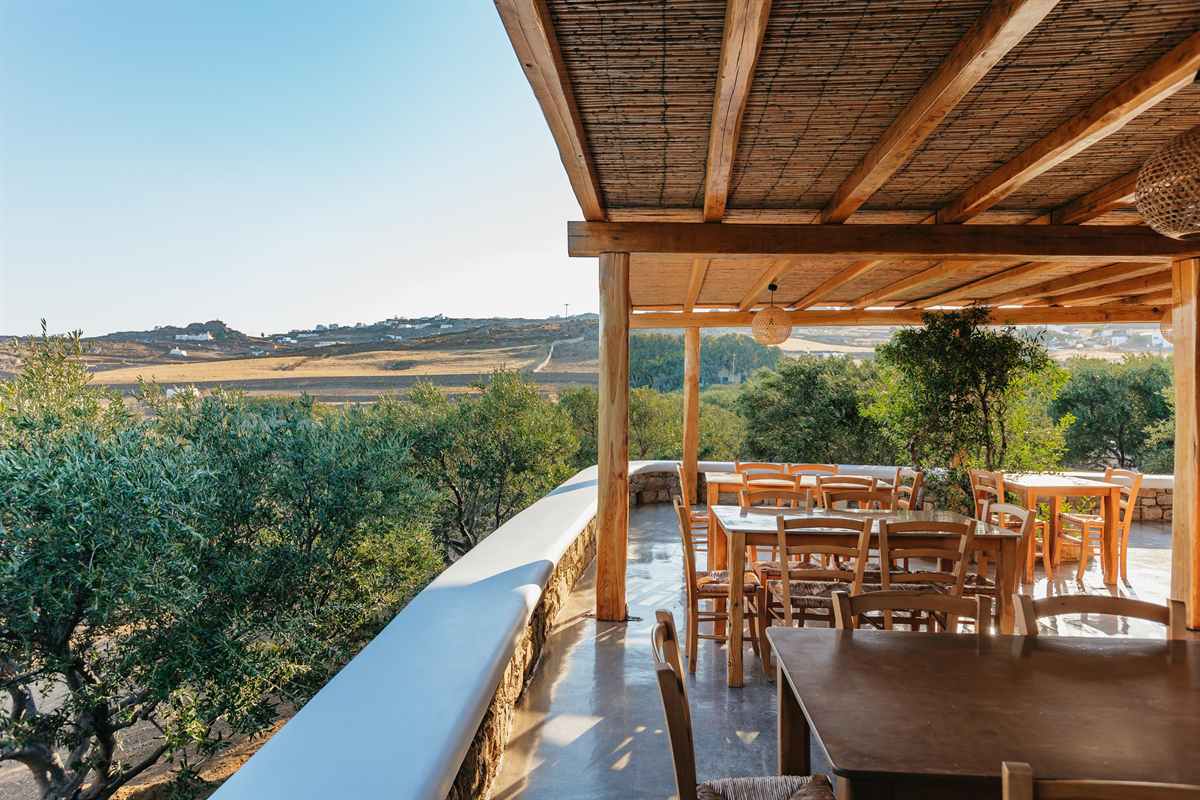
A Mykonos wine tasting at a traditional island farm fills three hours with four Greek wines, a plate of local food and a host who talks you through each glass. Fit the rest of your Cyclades days around more tours in Greece from our homepage.
Below you find what the Mykonos wine tasting includes, its start times, the hotel pickups and the road across the island, the host and the small group, the four-wine tasting and its techniques, the local food and pairings, Greek wine and its island grapes, the wind on the vines, Mykonos, Ano Mera and Chora, other wineries and the questions travellers ask.
What does the Mykonos wine tasting at a Mykonian farm include?
The Mykonos wine tasting at a Mykonian farm includes four different local wines and a dish of local products. Pickup and drop-off are part of the package. The activity provider is Cretan Spiti, and the setting is a traditional farm at the heart of the island.
The core of this Mykonos wine tasting is four distinct Greek wines. The highlights say the host hand-picked all four. The tour page does not name the wines, so the exact bottles are not published there.
The wines do not come alone. The listing says they are paired with a dish of local products. It also counts a local products tasting among the inclusions.
The operator’s page calls this food a snack with local products. It describes fine snacks based on authentic Greek products. It says they are selected to go with the wines. Neither page says meal, so think of the food as a pairing with the wines, not a full meal.
In short, the inclusion list covers four things:
- the tasting of four varieties of wine;
- a local products tasting;
- pickup and drop-off, with the details shown when you check availability;
- VAT and all legal taxes, as the operator’s page states.
The setting is a traditional farm. The highlights call it an authentic Mykonian farm, and the description places it at the heart of the island. The listing presents the outing as a group tour. Another travel site describes the same outing as a farm visit. It mentions 4 local wines and traditional delicacies.
One rule matters for families. The listing marks the Mykonos wine tasting as not suitable for children under 18 years. The tour page shows this rule under its own heading, Not suitable for. Keep that in mind before you book for a mixed group.
How long is the Mykonos wine tasting, and when does it start?
The Mykonos wine tasting lasts 3 hours and starts at either 12:00 or 18:00. At the start time you are picked up from your hotel and driven to the farm. The listing gives both numbers.
The operator’s page gives the same 3 hours for the Mykonos wine tasting experience. Another travel site gives the same two facts. It says the activity lasts 3 hours. It adds that you choose to start at noon or in the evening hours.
So there are two slots, one at midday and one in the evening. The first is 12:00 and the second is 18:00, which is 6 pm on a 12-hour clock. The listing also says to check availability to see starting times. Use that step to confirm the slot for your date.
Neither page says whether the 3 hours include the drive from your hotel. Leave extra time before and after the tasting when you plan your day.
The experience runs every day inside a season. The operator’s page says the Mykonos wine tasting operates daily from March 1st to November 30th. That is nine months of the year, from early spring to late autumn.
Plans change, and the terms allow for it. You can cancel with no fee up to 24 hours before the start, and you are refunded in full. That gives you a clear deadline once you pick a slot for the Mykonos wine tasting.
The deadline counts back from the start, so the 12:00 slot and the 18:00 slot have different cut-off hours.
How do the hotel and cruise terminal pickups work for the Mykonos wine tasting?
The Mykonos wine tasting includes pickup and drop-off at your hotel or at the cruise terminal. The listing counts both as part of the tour. Remote places are the exception, and they carry an extra charge paid in cash to the driver.
The listing says the tour starts with the hotel pickup. It says the transfers cover all hotels and the larger part of the island. The Mykonos wine tasting therefore has two pickup points, the hotel and the cruise terminal. The operator’s page speaks of a personal pick-up and a comfortable, well-appointed vehicle.
The listing gives seven examples of remote places. They are Elia, Kalafatis, Agrari, Panormos, Super Paradise, Paradise and Kanalia. Remote villas, apartments and houses count as well. The extra charge is paid per person for the round trip, in cash, on the spot to the driver. The listing states the exact sum, so read that line before you book.
These facts about the places come from Wikivoyage, not from the rules of the Mykonos wine tasting. It calls Panormos, on the north side of the island, an otherwise remote area. Getting there needs your own transport, it says. For drivers, it calls the road to Super Paradise difficult and winding, and the road to Agrari quite difficult.
The operator’s page names the port of your cruise ship as a transfer point. Mykonos is a popular cruise stop, says Wikivoyage. It says almost all cruise ships use the new port at Tourlos, north of the town. Other ships use the old port. The listing names neither port, and the pickup details appear when you check availability.
What is the road from Mykonos Town to Ano Mera like?
The listing says the Mykonos wine tasting drive crosses the road at the center of the island. That road joins the city of Hora with the village of Ano Mera. You are asked to relax and enjoy the scenery on the way.
The operator’s page for the Mykonos wine tasting says the vehicle crosses the heart of the island. It adds that you see the landscape between Mykonos Town, also called Chora, and the traditional village of Ano Mera. Wikivoyage calls Chora and Ano Mera the two main communities of Mykonos. The listing puts the farm at the heart of the island.
Wikipedia puts the town of Mykonos on the west coast. Wikivoyage puts Ano Mera about 7 km east of Mykonos Town, in the middle of the island. Kalo Livadi beach lies 10 km from the town and 2 km from Ano Mera. From the village, a weaving road runs down to Ftelia beach, and signs point to Fokos beach.
Wikivoyage sets the island hospital about 1 km out of town, uphill, on the road to Ano Mera. Buses for Ano Mera start at the northern bus station, not far from the old port ferry quay. These are facts about the island, not stops on the Mykonos wine tasting. The listing does not give the length of the drive.
Wikivoyage warns that roads on Mykonos are narrow in places, with sudden twists, for riders of motorbikes and quad bikes. Such riders need driving experience and extra care. A Mykonos travel blog adds that the island shows barren terrain only when you head inland. With the pickup included for the Mykonos wine tasting, you never drive it yourself.
Who hosts the Mykonos wine tasting, and what is the wine corner?
The sommelier Mr. Stathis Pasoglou greets you at the farm and leads you to a specially designed wine corner. The Mykonos wine tasting starts in that corner, with wines hand-picked by your host.
The tour listing and the operator’s page both name the same sommelier. Both say he welcomes you when you arrive at the farm. The operator’s page adds that he leads you to the wine corner of the venue and calls the corner atmospheric.
A sommelier is a trained wine professional who specialises in all aspects of wine service. Other names for the job are chef de vin and wine steward. Wikipedia says the role is more specialised and better informed than that of a wine waiter. In a restaurant, a sommelier can build the wine lists and train other staff.
The word comes from French. In Middle French it named a court official in charge of moving supplies. Wikipedia says it probably traces back to an Old Provençal word for a pack animal driver. One British way to say it is SOM-el-yay, and Americans say SUM-el-YAY.
The wine corner is a specially designed spot on the farm. The listing says you are seated there, so the Mykonos wine tasting is a sit-down one. It also calls the farm traditional.
How small is the group, and who can join?
The listing calls the Mykonos wine tasting a small group tour and limits it to 15 participants. The live host speaks English, so guests who follow English can join.
A group tour means you taste with other guests, not alone. The limit of 15 is the top size of that group. It also means each Mykonos wine tasting holds a fixed number of places. The listing gives no average group size, so treat 15 as a ceiling and nothing more.
Live means a person leads the tasting in front of you. The listing names English as the host’s language and names no other language. Guests who need another language will not find one named in the listing.
So who can join the Mykonos wine tasting? Travellers who follow English and book one of the 15 places. The listing also sets one age rule, which is given with the inclusions earlier in this post.
How does the step-by-step tasting of four single-variety wines work?
The Mykonos wine tasting presents four wines and takes you through the tasting stages step by step. The operator’s page calls the wines single-varietal and Greek, so each glass shows one grape variety on its own.
The listing says your host hand-picked the four wines. The operator’s page calls them carefully selected. It presents each glass as a chance to study one authentic Greek variety in depth. At this Mykonos wine tasting, then, you meet four separate grape characters.
The Mykonos wine tasting listing speaks of tasting stages without naming them. Wikipedia defines wine tasting as the sensory examination and evaluation of wine, and it names four recognised stages. They are appearance, the aroma in the glass, the sensations in the mouth and the finish, which is the aftertaste.
In any Mykonos wine tasting, tasters combine the stages to judge a wine’s complexity, character, potential and any faults. The overall verdict follows from careful description and comparison with recognised standards for the region or vintage, says Wikipedia.
Four wines tasted together also make a small flight. Wikipedia defines a tasting flight as a selection of wines presented for sampling and comparison. It gives three to eight glasses as the common size. A Mykonos wine tasting of four wines sits inside that range.
Wikipedia says a wine’s quality is judged more objectively when it is tasted alongside other wines, not in isolation. It also says a taster tries to order the wines before the first sip, by look and smell alone. Heavy wines are deeper in colour and generally more intense on the nose.
What do aroma, structure, balance and finish mean in a Mykonos wine tasting?
In a Mykonos wine tasting, aroma is the smell and finish is the aftertaste. Structure is the feel in the mouth, and balance is how the parts fit together. The operator’s page says you discover all four in each variety.
These words come from professional tasters. Wikipedia says sommeliers and buyers for retailers use a specialised vocabulary for wine aromas, flavours and general character. It adds that recreational tasting can use similar words in a less analytical way.
Aroma is the first of the four words. Wikipedia calls the bouquet the total aromatic experience of a wine. Once the wine is in the mouth, it says, body heat frees more of the aromas. Plato already sorted wine aromas into families in the fourth century BCE.
A related term, varietal character, describes how much a wine shows the aromas of its own grape. The term fits a Mykonos wine tasting of single-varietal wines, where each glass has one grape to show.
Structure is the feel of the wine in the mouth. Wikipedia says tasting a wine thoroughly means noticing its taste and mouthfeel, which combine textures, flavours, weight and overall structure. So structure is a mix of parts, not one single note.
Balance is the matching of those parts. Wikipedia describes integration as a state where no part, such as acid, tannin or alcohol, is out of balance. A well balanced wine is said to have reached a harmonious fusion.
Finish is the aftertaste. It comes last in the operator’s list and last in the four stages that Wikipedia names. Wikipedia also says spitting out wines tasted in a row means the taster loses the length and finish. It lists expressiveness and connectedness too, the bond between a wine and its land.
What are the basic wine tasting techniques you learn?
The Mykonos wine tasting lists basic wine tasting techniques among its highlights. The craft itself rests on five steps: colour, swirl, smell, taste and savour. They are also known as the five S steps: see, swirl, sniff, sip and savour.
The tour listing says you learn the basic tasting techniques. The operator’s page calls them basic evaluation techniques that bring out the detail and complexity of each variety. Neither page lists the steps one by one, so this section explains how the craft works.
Pausing is the habit behind all five steps. Reference works say that pausing and focusing through each step separates wine tasting from simply gulping a drink. Use that habit at a Mykonos wine tasting. Take one step at a time and do not rush to the next pour.
Comparing is a second technique. Tasting two or more wines side by side makes the differences between them easier to judge. Blind tasting goes further. The taster has not seen the label or the bottle shape, and a black glass can hide the colour. Knowing the origin, the reputation or the colour of a wine can sway the taster.
The practice is as ancient as wine production itself. A Mykonos wine tasting joins that old tradition. In the fourth century BCE, Plato listed the main flavours of wine and sorted its aromas into families. A formal method grew slowly from the 14th century onward.
How do you look at, swirl, smell and sip a wine?
Look at the colour against something white, swirl the glass gently and breathe in the bouquet. Then hold a sip in your mouth. These four moves work on every glass, including each pour at a Mykonos wine tasting.
Start with the eyes. At a Mykonos wine tasting, hold the glass at an angle above a white surface so the colour is easy to read. A full-bodied wine looks deeper in colour and smells stronger. Sweeter wines are denser, so they leave thick streaks, called legs or tears, on the glass when swirled.
Swirling lets more oxygen reach the wine and frees the molecules that make up the bouquet. Sparkling wine is swirled with care, never to the point where its bubbles escape. A gentle swirl is enough for any wine.
Then pause over the bouquet before you drink, at a Mykonos wine tasting or anywhere else. The nose is the major factor in the flavour you perceive in the mouth. A pause also helps the taster anticipate the flavours. Smelling can reveal faults too, such as cork taint or oxidation. About 15 million smell receptors read the aroma molecules.
A sip at a Mykonos wine tasting works across the whole mouth, not on one spot. Hold the wine until it has saturated the taste buds. Body heat then frees more aromas, which reach the smell receptors from inside the mouth.
Pursing the lips and breathing in through the gap sends air over the wine and frees even more esters. The tongue map is a misperception. It claims the tip of the tongue tells how sweet a wine is and the edges tell its acidity.
The glass matters too. Reference works consider a glass ideal when it is wider toward the bottom and narrower at the top. Tulip and egg shapes both fit that description.
The reference tasting glass holds about 215 ml but is made for a 50 ml pour. Its narrow opening concentrates the bouquet. Check the glass in your hand at a Mykonos wine tasting.
What local products come with the Mykonos wine tasting?
Kopanisti cheese and louza cured pork are two local products of Mykonos. The listing for the Mykonos wine tasting says local products come with the wine. It names no foods, so these two show what that can mean.
Kopanisti carries a protected designation of origin, and it is the island cheese to know before a Mykonos wine tasting. It is a salty, spicy cheese. Makers on Cyclades islands such as Mykonos, Tinos, Andros, Syros and Naxos produce it. They use cow, sheep or goat milk, or a mix.
The milk is cooked with yeast until it thickens. The maker then works the mixture by hand once every hour for the first 24 hours. The cheese rests in cotton cloth under a stone for a week, which helps drain extra liquid. After that it is mixed again and put into containers, traditionally earthenware, to finish aging.
The Greek word kopanisti means something that has been beaten, which refers to the kneading. The kneading repeats three or four times until the cheese ripens. Wikipedia says the microbial growth it encourages gives the cheese its peppery taste. A Slow Food page quoted there gives 45 to 60 days of ripening, for a pasty, buttery, creamy texture.
On the northern Cyclades islands of Mykonos, Syros, Andros and Tinos, louza is preserved pork loin. Wikipedia files it under cured pork tenderloin, a food found in Mediterranean Europe and South America. Ask your host at the Mykonos wine tasting which local products reach your plate.
How does wine pair with Greek cheese and cured meat?
For a Mykonos wine tasting, match the weight of the food to the body of the wine. Wikipedia names this balance as the basic element of pairing. A heavy wine with a light dish, or the reverse, can let one partner overwhelm the other.
Wikipedia calls the modern art of food pairing a relatively recent phenomenon. Before it, local cuisines were paired simply with local wines. A Mykonos wine tasting that sets Greek wines beside local products follows that older habit. If the wine is the focus, choose food a little lighter in weight, so it does not compete.
Cheeses differ in flavour and texture, so each type has its own match. Wikipedia counts cheese among the classic wine pairing dishes, so learn its rules before a Mykonos wine tasting. These are general rules for cheese, not a verdict on kopanisti.
- Soft, rindless cheeses that have not aged suit dry or off-dry white wines, light-bodied reds and rosés.
- Creamy cheeses with a bloomy rind, like Brie, suit a sparkling wine made by the traditional method.
- Aged hard cheeses tend to go with a full-bodied, complex red.
- A hard, nutty cheese can also match a nutty, slightly sweet wine.
Pairing can also weigh the sugar, acid, alcohol and tannins of the wine. With dishes high in protein and fat, tannins bind to the proteins, says Wikipedia. Red meat and hard cheeses are its examples, and the tannins then come across as softer. In fatty, oily, rich or salty dishes, a wine’s acidity can cut through the heaviness.
Salt needs care. Wikipedia notes that salt and spicy heat accentuate the alcohol in a wine. They also sharpen the feeling of heat in the mouth. Sweetness can contrast with salt, as in the European custom of salty Stilton cheese with sweet Port. Keep this in mind with a salty, peppery cheese like kopanisti at a Mykonos wine tasting.
How old is Greek wine, and how did it grow?
Greek wine is about 6,500 years old. Vines have grown in Greece since the late Neolithic period. At first, wine was made on a household or communal basis. Greece is also among the first wine-producing lands in Europe. A Mykonos wine tasting pours a drink from one of the world’s oldest wine-making lands.
By the early Bronze Age, growing vines at home had become widespread. Early amphora remains show that the Mycenaeans actively traded wine throughout the ancient world. Festivals were held through the year in honour of the god of wine. Wine was almost always diluted, and snow took the place of water when it was served cold.
The Greeks believed that adding resin, herbs, spice, seawater, brine, oil or perfume improved a wine. Retsina is a traditional Greek wine flavoured with pine resin. Under the Roman Empire, Greek wine had especially high prestige in Italy. A Mykonos wine tasting lets you try Greek wine in the country that made it.
In the medieval period, wines from Crete, Monemvasia and other Greek ports reached northern Europe. Venetian traders widely exported Malvasia, a highly regarded sweet red wine, during the Middle Ages. A travel site says grape growing on Mykonos dates back to 500 B.C. The same site links the loss of vineyards to a nineteenth-century decline, spurred by the phylloxera outbreak.
The Ministry of Agriculture set up a Wine Institute in the nineteen-thirties. In the nineteen-sixties, retsina suddenly became the national beverage, and growing tourism linked it with Greece worldwide. The first Cabernet Sauvignon vineyard in Greece was planted in that decade. Appellation laws followed in the early nineteen-seventies. Check a bottle’s origin at a Mykonos wine tasting.
Which Greek grape varieties grow in the Cyclades?
The Cyclades grow white grapes such as Assyrtiko, Athiri and Aidani, and red grapes such as Mandilaria and Mavrotragano. All five are Greek wine grapes. Greece has approximately 200 vine varieties, so these five island names are a good start before a Mykonos wine tasting.
Athiri is a white grape with a lemon character. It is a lower acid variety and one of the oldest. Aidani is a white grape with a floral aroma. Winemakers mainly blend it with Athiri to make dry wines. A travel site lists Athiri among the grapes found on Mykonos. Know Athiri before a Mykonos wine tasting.
A wine blog about the Cyclades says Mykonos uses just a handful of grapes in commercial production. For whites it lists Assyrtiko and Malagousia. Mandilaria makes the rosé, and it makes red together with Agiannitis. The blog calls Mandilaria a commonly used red variety throughout the Cyclades. Keep this list in mind at a Mykonos wine tasting.
Malagousia grows mainly in Macedonia. Wikipedia says it has a special aroma and makes elegant, full-bodied wines. The blog adds that Malagousia makes dry white wine and, picked late, sweet dessert wine. On Naxos, the blog says winemakers use indigenous and international grapes, and it names Fokiano for rosé. Ask about these grapes at a Mykonos wine tasting.
A travel site notes that, unlike Paros with its PDO, Mykonos has no island-specific appellation. Other grapes belong to other regions. Xinomavro is the predominant grape of Macedonia. Savatiano is the predominant white grape of Attica. Moschofilero comes from Mantineia in Arcadia. Vidiano is indigenous to Crete. Learn the Cyclades names above for a Mykonos wine tasting.
What is Assyrtiko, the leading white grape of the islands?
Assyrtiko is a white Greek grape native to Santorini, now grown on other Aegean islands too, such as Paros. Its acidity stays high even when the grapes are very ripe. Learn its name before a Mykonos wine tasting of island whites.
Wikipedia says Assyrtiko grows widely in the arid, ash-rich volcanic soil of Santorini. It also grows in other parts of Greece, such as Chalkidiki. Wikipedia lists five other spellings of the name: Asyrtiko, Assyrtico, Assirtico, Asurtico and Arcytico. Spot any of them on a bottle during a Mykonos wine tasting, and it is the same grape.
The grape’s nickname is “white grape in red’s clothing”. Wikipedia ties it to the full-bodied wines Assyrtiko makes, which average 13.5% alcohol by volume. A travel blog lists Assyrtiko among the grapes found across Mykonos and calls it dry, acidic and fruity. Those three words give you a start when you describe a glass at a Mykonos wine tasting.
Across Greece, growers make both dry and sweet wines from Assyrtiko. The sweet side includes musky, syrup-sweet dessert wines in the style of Vinsanto. Wine writers and sommeliers cited by Wikipedia point to the aging potential of Santorini Assyrtiko. Its mineral profile suits blending, so check the grapes in any blend you taste at a Mykonos wine tasting.
Wikipedia’s page on Greek wine calls Assyrtiko multi-purpose and largely island-based, with a character similar to Riesling. The grape has also travelled. Harold Olmo, a grape breeder at the University of California, Davis, imported the original cuttings into the United States. They sat in storage there until the Abbey of New Clairvaux in Northern California took an interest.
What are Mandilaria and Mavrotragano, the red grapes of the islands?
Mandilaria and Mavrotragano are red Greek grapes of the islands. Mandilaria grows across the Greek Isles, and Mavrotragano is among Greece’s oldest red varieties, native to the Cyclades. Both make red and rosé wine, so their names help at a Mykonos wine tasting of island reds.
Wikipedia calls Mandilaria a red Greek grape grown throughout the Greek Isles. It works as a blending component, and its wines have deep colour and a light body. The grape page lists 29 other names, such as Amorgiano and Kountoura. With so long a list, ask for the grape behind each red or rosé at a Mykonos wine tasting.
A Cyclades wine blog says commercial Mykonos wine uses mandilaria for rosé and, with agiannitis, for red. That makes Mandilaria a grape to look for when a Mykonos wine tasting pours rosé or red. Historically, Crete’s Liatiko was blended with Mandilaria and Kotsifali to make Malvasia. Venetian traders exported this sweet red wine widely in the Middle Ages.
Mavrotragano began on the volcanic soils of Santorini. Wikipedia’s page on Greek wine says the grape survived for centuries in harsh lands and nearly vanished. Growers revived it with special pruning and cultivation techniques. It now grows on Tinos and Crete too. Its rescue gives you a good question for the host of a Mykonos wine tasting.
Traditionally Mavrotragano made sweet wine, but it now makes complex dry reds and rosés. The wines have deep colour, firm tannins, moderate acidity and a mineral note. The grape is blended with Mandilaria, Xinomavro, Syrah and Kotsifali. Under European Union rules on wine names, Mavrotragano wines hold Protected Geographical Indication status, listed as PGI Cyclades.
What is Santorini wine, and how are its vines trained?
Santorini is a Greek wine region on the Santorini archipelago in the southern Cyclades. Growers train the vines low to the ground and weave them into baskets. Mykonos is part of the same island group, so this region is worth knowing before a Mykonos wine tasting.
Wine has been made on Santorini since ancient times. Wikipedia lists three classified wines: Santorini, Nykteri and Vinsanto. A bottle labelled Santorini holds at least 75% Assyrtiko, and Athiri, Aidani or both make up the rest. Mezzo is a sweet wine outside the classification, and its name means “less sweet”. The region also makes blended and rosé wine.
Nykteri means “working the night away” in Greek. Growers traditionally picked its grapes at night, before sunrise, to avoid the heat. Once made, the wine must age in oak for at least three months. Santorini wine became known worldwide in the Middle Ages, under Venetian influence. Santorini is a useful comparison for a Mykonos wine tasting.
The vines stand without stakes. Growers weave them into rings as they grow, with the grapes facing the inside. The leaves and the vine shield the fruit from harsh winds and sunlight. Wikipedia calls this system koulara, and its Assyrtiko page writes kouloura. A Mykonos wine tasting is a fair moment to ask why island growers keep vines low.
Wikipedia calls the vineyard soils very poor, made of volcanic ash and rocks. In long, dry summers the roots can reach deep into the ash-rich soil in search of moisture. Growers plant varieties together and do not always know which grapes are which until the harvest in mid-August. About 1,200 hectares of the island of Santorini are planted with vines.
How does the wind shape vineyards on Mykonos and the Cyclades?
Strong north winds, called the meltemi, sweep the Aegean from late spring to mid-September. Santorini growers shelter vines in baskets, and another farm on Mykonos names the wind as part of its microclimate. A Mykonos wine tasting takes place on the Island of the Winds.
Wikipedia calls the etesians, or meltemia, a dominant weather influence in the Aegean Basin. So the wind is part of the setting for a Mykonos wine tasting. The word etesian comes from the Greek etos, which means year. The Greek and Turkish names are probably a loan from the Italian mal tempo, which means bad weather.
The wind does not blow from one fixed point. Wikipedia says etesians come from anywhere between north-east and north-west, depending on local topography. In the central Aegean they blow from the north. They are at their strongest in the afternoon. Their weather is ordinarily fine and clear, and the northerly winds temper the summer heat.
Wikipedia gives Mykonos its nickname for its very strong winds. It adds that the seasonal meltemi and the sea keep summer days relatively cool. That farm lists strong north winds and a lack of water as its microclimate. It credits them, with chemical-free soil, for healthy grapes. Ask about the wind at a Mykonos wine tasting.
On Santorini, one study compared the basket with VSP training. The study found the basket vines under less water stress and better protected from heat spikes and gusts. Wikipedia says Santorini’s vineyards are described as arid and windswept. Wikivoyage names a constant wind in the Cyclades in July and August. That wind gives any Mykonos wine tasting a wider setting.
What is Mykonos like as an island?
Mykonos is a rocky Greek island in the Cyclades, set between Tinos, Syros, Paros and Naxos. It lies in the South Aegean region. In ancient times it was a rather poor island with limited agricultural resources. Today tourism dominates its economy, and a Mykonos wine tasting belongs to that trade.
The island behind a Mykonos wine tasting has a name with two old explanations. Hesychius of Alexandria linked it to the ancient Greek word Mykon, which roughly means “pile of stones” or “rocky place”. Stephanus of Byzantium tied it to a mythical hero called Mykonos, son of Anius. Herodotus names the Carians as the first inhabitants.
Ionians from Athens seem to have followed in the early 11th century BC. Delos, only 2 km away, was the meeting ground of the Delian League. So Mykonos became an important place for supplies and transit, long before any Mykonos wine tasting. Clay and a mineral called baryte were mined on the eastern side until the late 20th century.
A Mykonos wine tasting today takes place on an island that Ottoman rulers held for almost three centuries. Mykonos was a trading centre until the end of the 18th century, with regular pirate raids. The economy then declined, especially after the Corinth Canal opened and the First World War began. Mykonians left to find work in mainland Greece and abroad.
Tourism then took over, helped by the French School of Archaeology, which began work on Delos in the 19th century. Wikipedia calls Mykonos the second top summer destination in Greece. It estimates at least 1.5 million visitors a year, against 10,704 residents in the census count. A Mykonos wine tasting therefore shares the island with a big crowd.
What are Ano Mera and the Panagia Tourliani monastery?
Ano Mera is the only inland settlement on the whole of Mykonos. Its main landmark is the Panagia Tourliani monastery, founded in the 16th century. Anyone planning a Mykonos wine tasting can find the village on the island map, away from the coast.
Ano Mera is one of the ten villages of Mykonos, and the municipality’s visitor page gives it 1,459 inhabitants. The all-white monastery stands right in front of the central square, and the main settlement grew around it. Beyond a Mykonos wine tasting, the village offers that square, its tavernas and a cheese workshop.
The square has been car-free since the start of the 21st century. Cafes and tavernas surround it and are known for meat on the spit and grill. A kopanisti workshop in the village holds the secrets of making the spicy cheese. Tradition says monks took refuge here, and the place became known as Ano Mera.
The monastery was founded on the site of an earlier church of the Entrances of Panagia. It is dedicated to the Dormition of the Theotokos, the Virgin Mary. The main church has a marble facade and dates from the 17th century. A ten-year renovation followed in the 18th century. The bell tower carries marble reliefs from the early 19th century.
The icon goes down to Chora on the Saturday of the first week of Great Lent. It goes back up to the monastery on Lazarus Saturday. Island ships never left until sailors prayed to the icon. The feast falls on 15 August, with the main celebration on 23 August. Check those dates if your Mykonos wine tasting is in August.
What is Mykonos Town, the island capital known as Chora?
Mykonos Town is the port town and capital of the island. Greeks call it Chora, the word they use for an island’s main town. Beside a Mykonos wine tasting, Chora offers windmills, farming and maritime museums, a library and the Little Venice waterfront.
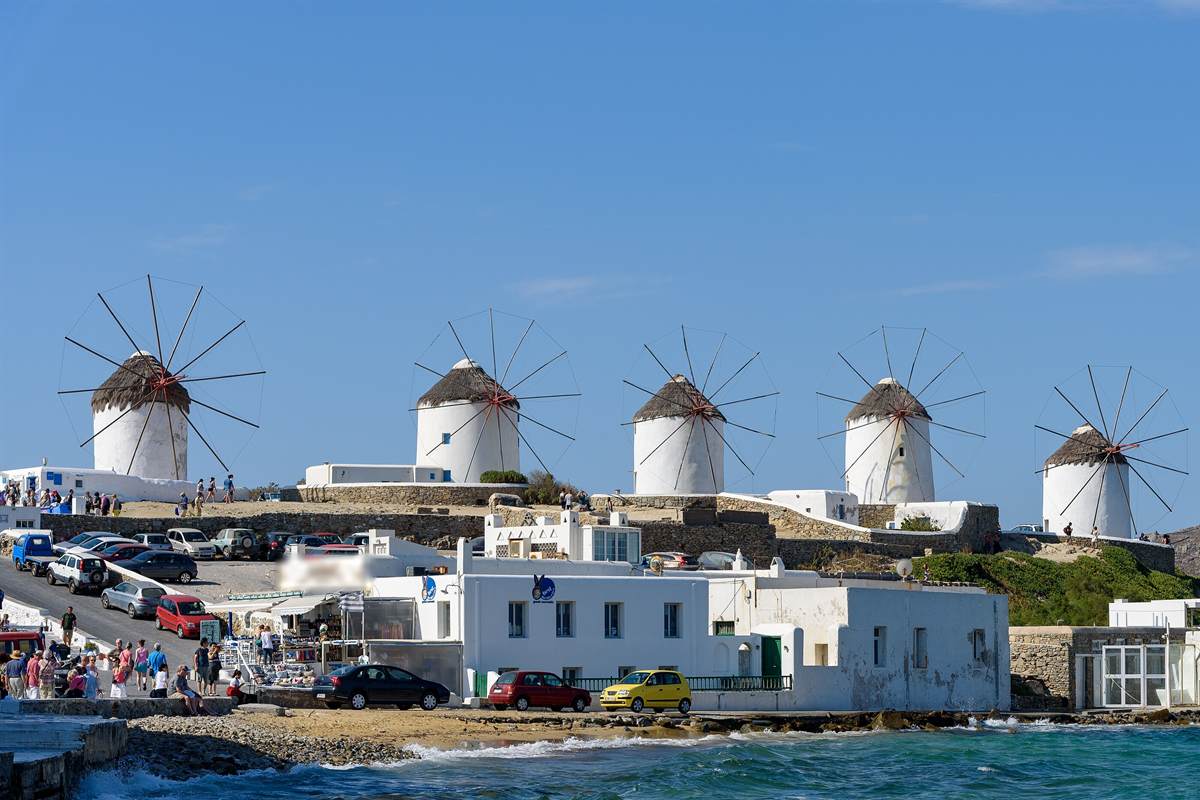
Wikipedia counts 16 windmills on Mykonos, and seven stand on the landmark hill in Chora. You see them first when you sail into the harbour. The mills mainly ground wheat and were an important source of income. Building went on into the early 20th century. Mills have since been restored as homes for locals and as vaults for heritage documents.
A farm hosts the Mykonos wine tasting, and Chora has a farming museum too. Wikipedia places the Agricultural Museum in the Bonis Mill above the town. The area is Ano Myloi, or Upper Windmills. Old tools and machinery are on show, with views of the area. Wikivoyage says the island was once a great producer of wheat and bread.
Wikivoyage places Little Venice, also called Alefkandra, at the western end of town. Its houses have two and three storeys and stand like a wall above the sea. Their wooden balconies are colourful. The windmill area, called Kato Mili or Lower Mills, looks out over Little Venice. The walk from the Fabrika bus station takes five minutes.
A Mykonos wine tasting shows the island’s wine, while two places in Chora show its past. The Municipal Library fills an 18th-century mansion on Ayia Kyriaki Square. It holds over 8,000 volumes, old photographs, Cycladic coins and seals. The Aegean Maritime Museum, in a 19th-century building in the centre, shows ship replicas and coins with nautical scenes.


What other wineries and wine tastings exist on Mykonos?
Two other places on the island host their own Mykonos wine tasting. One is another estate on Mykonos, in Marathi. The other is another farm and vineyard in Ano Mera, at an old monastery vineyard. Both are run by families.
The estate’s own page tells a three-generation family story. Its tour visits a 22-acre vineyard with five grape varieties and a 5-acre olive grove. The grape harvest is done in September. The estate also has a small museum of old machinery, such as a wine press and an olive press. Live lute and tsampouna music is part of the visit.
A Mykonos wine tasting at the estate comes at the end of its visit, which lasts about 2 hours. You taste wines from its own winery, made from grapes grown on the estate. Homemade olive oil and bread from a wood-fired oven come with them. The visit runs every day, in English and Greek, and transport is not provided.
The farm grows its grapes by organic and biodynamic methods. Its own page dates the vineyard to the 19th century. Visitors learn about the vines, the wine making and Mykonos traditions. A Mykonos wine tasting there comes with traditional products from Mykonos and the Cyclades. Besides wine, the farm makes vinegar, vine leaves, grape molasses and honey.
At the end of August, once the harvest is finished, the farm’s vineyard hosts Mykonian folk music and barefoot grape-stomping. A Greek islands travel site lists two wineries for Mykonos, and one of them is this organic vineyard. With the tasting at a Mykonian farm, that makes three ways to enjoy a Mykonos wine tasting on the island.
What else do travellers ask about the Mykonos wine tasting?
Is Delos part of the Mykonos wine tasting?
No stop on Delos appears in the listing, so treat the island as a separate trip. Delos is a small Greek island near Mykonos, close to the centre of the Cyclades. Wikipedia lists its area at 3.43 square kilometres.
Wine still links Delos and the island of the Mykonos wine tasting. Wikipedia says wine presses found among the ruins of the ancient city on Delos date to the Roman Imperial period. They suggest that the people there were busy with vine growing on a considerable scale. UNESCO lists Delos as a World Heritage Site.
How large is the Cyclades island group?
Wikipedia counts about 220 islands in the Cyclades. Naxos is the largest, and Syros has the largest population. The name refers to the islands forming a circle around the sacred island of Delos.
The islands are peaks of a submerged mountainous terrain, apart from two volcanic ones, Milos and Santorini. The soil is not very fertile, except on Naxos. Island produce includes wine, fruit, wheat, olive oil and tobacco. A Mykonos wine tasting puts one item from that list in your glass.
Why does retsina taste of pine?
Retsina is a Greek white, rosé or, very rarely, red wine. Wikipedia says it has been made for at least 2,000 years. Its flavour is said to come from sealing wine vessels, especially amphorae, with Aleppo pine resin in ancient times. The resin helped keep air out and gave the wine a resin aroma.
Today small pieces of resin go into the must during fermentation. Major production centres around Attica, Boeotia and Euboea. Under European Union rules the name retsina is protected. Ask the host of your Mykonos wine tasting how the Greek wines in your glass differ from it.
What do vertical and horizontal tastings mean next to a Mykonos wine tasting?
Wikipedia says vertical and horizontal tastings are events arranged to highlight differences between similar wines. In a vertical tasting, different vintages of the same wine type from one winery are poured. This stresses the differences between vintages.
In a horizontal tasting, the wines come from one vintage but from different wineries. Keeping the wine variety and region the same highlights the style of each winery. The Mykonos wine tasting listing uses neither term.
How do you reach Mykonos by ferry to join a Mykonos wine tasting?
Wikivoyage says ferries and fast catamarans run daily to Mykonos from Piraeus, the port of Athens, and from Rafina. The trip from Piraeus takes between 3 hours 30 minutes and 5 hours 15 minutes, depending on the ferry type. From Rafina it takes between 2 hours 10 minutes and 5 hours 30 minutes.
Boats also reach Mykonos from other islands. Those from Syros, Andros, Tinos and Paros call at Mykonos more than once a day. Daily boats also come from Crete, Santorini, Ios and Naxos. Booking ahead is only necessary from mid-July to late August, or around a Greek holiday, says Wikivoyage.