
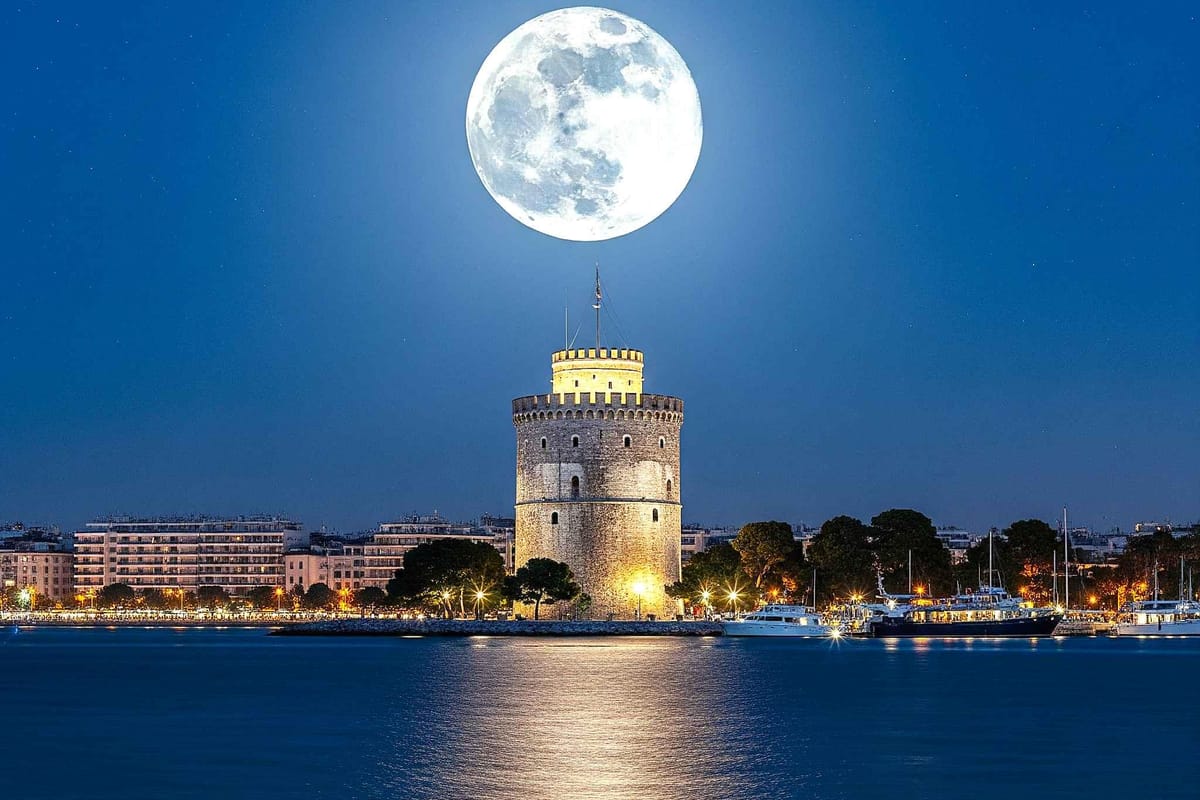
A Thessaloniki underworld night walk turns the old streets after dark into a stage for stories about Hades, Persephone and the realm of the dead. Pair the evening with other days from our list of tours in Greece.
This page covers what the walk includes, length and group size, Hades and Persephone, the closing oracle card reading, the ancient, Byzantine and Ottoman history behind the legends, the old town after dark and the questions travellers ask.
What does the Thessaloniki underworld night walk include?
The Thessaloniki underworld night walk includes a walking tour led by a local storyteller. You hear tales from Greek mythology and local folklore. You learn the lesser-known history of the city. You also have time to ask questions.
Dawn Tours is the activity provider. The operator’s listing names six items that come with the walk:
- a walking tour led by a local storyteller
- tales from Greek mythology, local folklore and Thessaloniki’s lesser-known history
- visits to landmarks and lesser-known locations connected to the stories
- cultural insights about the myths and legends
- chances to ask questions and talk with the leader
- recommendations for exploring Thessaloniki afterwards
The listing counts questions as part of the walk, so you talk with the leader and do not only listen. The last item sends you home with ideas for what to see in the city next. The Thessaloniki underworld night walk is a story walk first, and the leader tells every tale live.
Four things are not included. They are hotel pick-up and drop-off, food and drinks, and personal expenses. Entry fees to museums or archaeological sites (if applicable) are left out too. Plan your own dinner and your own way back to your hotel, because the listing leaves both to you.
Cancelling is free of charge until 24 hours before the walk starts.
How long is the Thessaloniki underworld night walk, and how large is the group?
The Thessaloniki underworld night walk lasts 2 hours, and the group is limited to 10 participants. A group that small lets every guest hear the stories and join the talk.
The walk happens in the evening and moves through old streets of Thessaloniki. Start times appear on the booking page once you pick a date. The meeting point changes with the option you select, so read the details for your option before you set out.
The Thessaloniki underworld night walk runs in English or French. Ten people at the limit is a small group. A travel site for families says it gives children room to ask questions and join the conversation.
That site calls the walk right for ages 13 and up. It says the stories hold a little darkness, and younger children can find the themes or the length less comfortable. This is that site’s opinion, not a rule from the operator, so a parent still decides what suits the child.
Who are Hades and Persephone, the heart of the Underworld tales?
Hades is the Greek god of the dead and the king of the underworld, and Persephone is his queen. The Thessaloniki underworld night walk tells the myths of this pair, as its listing states.
Wikipedia describes Hades as the god of the dead and riches and the king of the underworld. In the old stories he is the key-holding jailor, and the souls of the dead are his prisoners.
Persephone is the daughter of Zeus and Demeter. Wikipedia says she became the queen of the underworld after her abduction by her uncle Hades. The listing puts both gods first in its highlights, so the Thessaloniki underworld night walk is built on their myth.
The pomegranate is the key detail in the myth behind the Thessaloniki underworld night walk. Hades secretly gave Persephone a seed to eat, and eating it binds her to him and to the underworld. She was obliged to spend a third of each year there, the winter months. Her return to the surface stands for spring.
The listing adds restless spirits, Byzantine beliefs and traditions that blurred the line between the living and the dead. Hades and Persephone open that list, so the Thessaloniki underworld night walk grows from their story.
What is the oracle card reading that closes the walk?
The oracle card reading is the last part of the Thessaloniki underworld night walk. The listing calls it a closing oracle card reading. A travel site says it follows the stories of Hades and Persephone.
Wikipedia defines cartomancy as fortune-telling or divination using a deck of cards. It also names specialized decks as oracles, each with its own number of cards. On those decks the imagery limits how freely a reader can interpret the cards.
The same page says readers use intuition and active listening to draw out details of a person’s life. They then link those details to the symbolism of the cards. The cards work as a ritual that ends the evening. The listing says the Thessaloniki underworld night walk explores symbolic, spiritual and supernatural worlds, rather than historical facts alone.
The listing does not describe the cards, the questions or the time the reading takes. So this post does not either. Treat the Thessaloniki underworld night walk as a story evening that ends with cards. Let the leader explain the rest on the night.
How did ancient, Byzantine and Ottoman rule shape the legends of Thessaloniki?
Each age of rule added a layer of stories. King Cassander founded the city around 315 BC. The Byzantine Empire ranked it second to Constantinople. The Ottomans held it for almost five centuries. The Thessaloniki underworld night walk draws on all three eras, says its listing.
The city took its name from Thessalonike, a half-sister of Alexander the Great. One legend says she became a mermaid in the Aegean after Alexander died. Under Rome, the city became the capital of the province of Macedonia. It also grew into a trade hub on the Via Egnatia.
Byzantine Thessaloniki was considered the second city of the Empire after Constantinople. Its patron saint is Demetrius, a Christian whom Galerius is said to have put to death. Christians credited him with miracles that saved the city. The listing adds that the Thessaloniki underworld night walk covers Byzantine beliefs and local folklore.
The Ottoman Sultan Murad II captured the city after a three-day siege. Under Ottoman rule, Sephardic Jews began arriving from Spain. Stone mosques such as the Hamza Bey Mosque still stand. They trace the age behind the Thessaloniki underworld night walk legends.
The listing says myth, religion and oral storytelling shaped the city’s identity across the ancient, Byzantine and Ottoman eras. In the Thessaloniki underworld night walk, it looks at symbolic, spiritual and supernatural worlds, not historical facts alone.


What does the old part of Thessaloniki look like after dark?
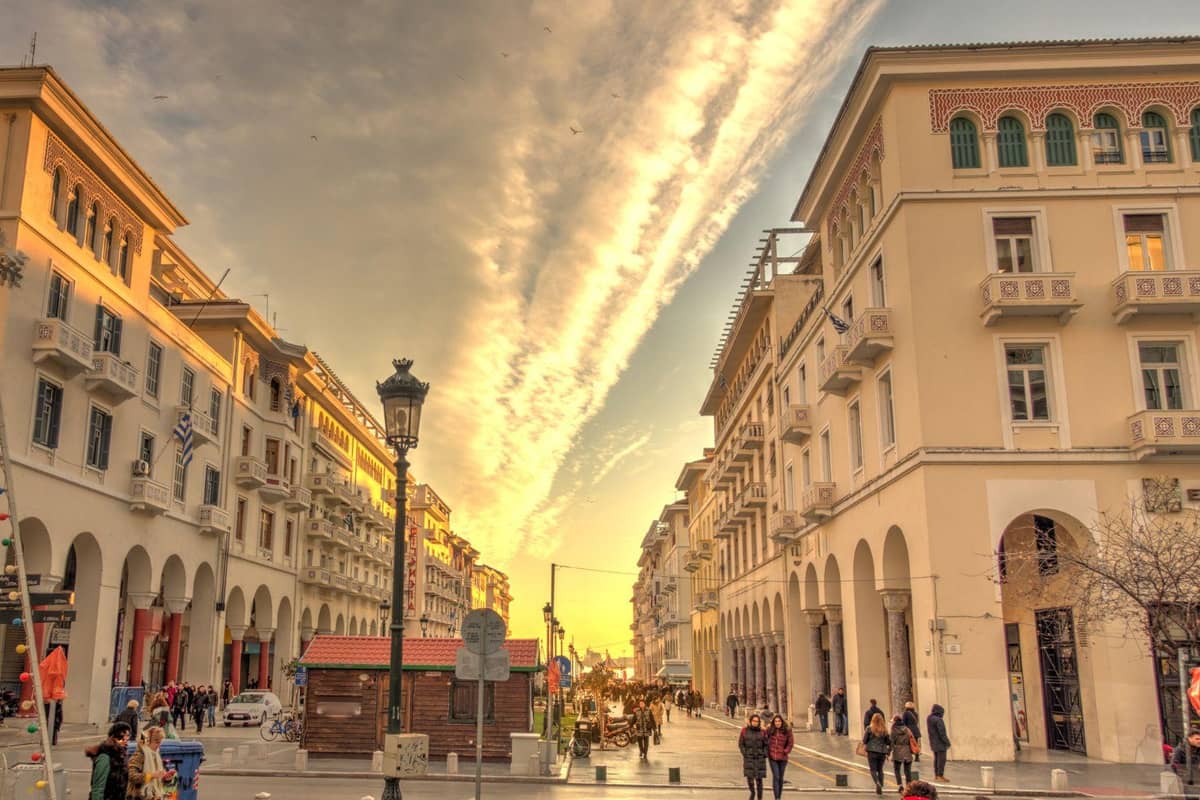
The old part of Thessaloniki is Ano Poli, the Upper Town, set on the highest ground of the city. A travel directory says evening walks there feel quieter, with lights on the narrow streets. That calm setting suits a Thessaloniki underworld night walk.
Ano Poli spreads over the high ground to the north, around the acropolis of the city. Wikipedia calls it the old town and the highest part of the city. Stretches of the old city walls still wrap around it. Old houses blend Greek and Ottoman building styles, and the lanes are paved with small stones.
Fire swept the lower city long ago, yet the Upper Town still shows Byzantine and Ottoman planning. For a Thessaloniki underworld night walk, such an old quarter gives the legends a real setting. The same directory notes steep slopes and steps in the district, and wide views of the skyline.
The operator’s listing calls the Thessaloniki underworld night walk an evening walk through the old streets. Walls and lit lanes make a quiet backdrop for the legends of Cassander’s city.
What else do travellers ask about the Thessaloniki underworld night walk?
Does the operator run other walks in Thessaloniki?
Yes. The operator’s own Thessaloniki page lists two more outings beside the Thessaloniki underworld night walk. They are a Scavenger Hunt of the gods and Coffee, Pastries and Stories of Mythology. The same operator also runs similar walks in other cities.
Who is the walk made for?
The listing speaks to travellers who are passionate about Greek mythology and folklore. It also promises hidden stories from outside the travel books. A visitor who wants a fresh angle on the city fits this evening walk well.
How do I book the Thessaloniki underworld night walk?
Open the operator’s listing, select a date and set the number of adults. Then press the check availability button. The booking box also shows the language for the option you pick, so check it before you pay.
What does the name Hades mean?
Since ancient times the name has been read as “the unseen one”, says Wikipedia. Around the fifth century BC the Greeks began to call him Plouton, meaning “wealthy”. They thought riches such as crops and metals come from the soil below.
Who guards the gates of the underworld in Greek myth?
Wikipedia names Cerberus, the three-headed guard dog of the underworld. Every soul was free to enter, but none was ever able to escape. Heracles captured the dog as his final labour. The listing names no dog, so ask the leader on the night.